
Advertisement
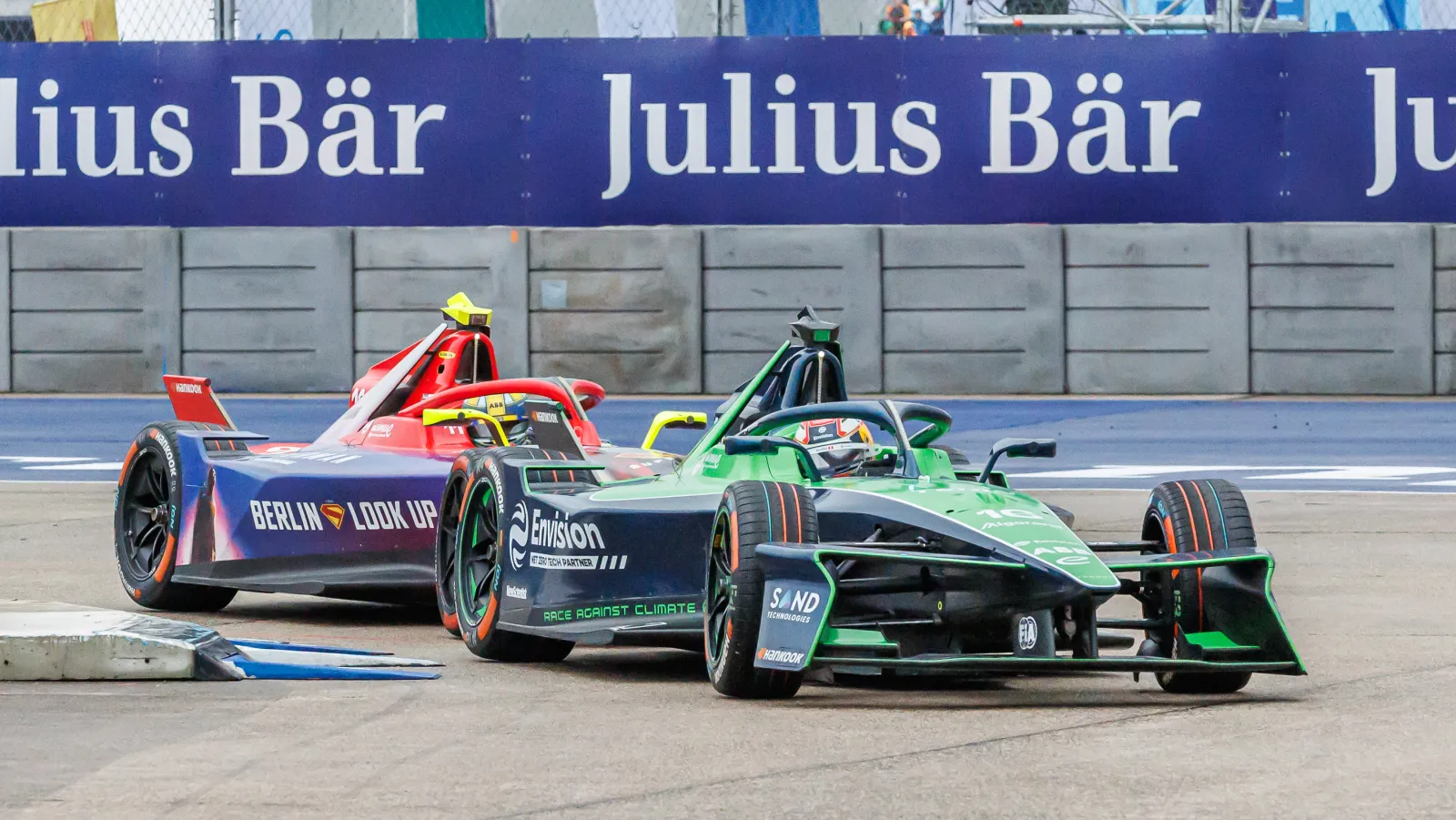
Formula E season 13 starts on 18 December 2026 with a night doubleheader in Jeddah, and what is new for Formula E season 13 comes down to three things: a new car, a new weekend format and the longest calendar the series has run. The car is the Gen4. It makes 450 kW in race mode, 600 kW in Attack Mode, and it drives all four wheels all of the time. As of 16 September 2026 nobody has raced one.
The short version
Formula E season 13 begins on 18 December 2026 with a night doubleheader in Jeddah and ends in Tokyo on 25 July 2027. The new Gen4 car makes 600 kW in Attack Mode, 450 kW in race trim, recovers up to 700 kW under braking, and drives all four wheels permanently. There are 21 races across 13 cities.
What is new for Formula E season 13
Season 12 finished on 16 August 2026 at London’s ExCeL, where Pascal Wehrlein took his second drivers’ title by five points over Jake Dennis. Jaguar TCS Racing won the teams’ championship, Porsche had already sealed the manufacturers’ award in Tokyo, and that was the end of the Gen3 cycle after four seasons.
What replaces it is a bigger change than the Gen2 to Gen3 step. The Gen4 is longer, heavier, far more powerful and driven by two motors instead of one. The FIA has also split the doubleheader weekend into two kinds of race, and the calendar has grown from 17 races to 21 while adding two permanent circuits. If you stopped watching around 2023 because the cars felt slow for the money, this is the season to look again.
Formula E Gen4 car specs: power, regen and weight
The Formula E and FIA fact sheet on the Gen4 gives race power as 450 kW and Attack Mode power as 600 kW (804 bhp). That is 50 per cent more in race trim and 71 per cent more at peak than the Gen3 Evo managed. Top speed rises from 320 km/h to 335 km/h, and 0 to 200 km/h drops to 4.4 seconds, a second and a half quicker than the old car.
Here is how that sits next to the cars people will compare it with.
| Spec | Gen3 Evo (season 12) | Gen4 (season 13) | 2026 F1 car | 2026 WEC Hypercar |
|---|---|---|---|---|
| Race power | 300 kW | 450 kW | about 750 kW combined | 500 kW maximum |
| Peak power | 350 kW | 600 kW | about 750 kW | 500 kW |
| Max electrical recovery | 600 kW | 700 kW | 350 kW (MGU-K cap) | BoP dependent |
| Driven wheels | rear (front axle only in qualifying and Attack Mode) | all four, always | rear | rear, front hybrid on some LMH |
| Minimum weight | 856 kg | 954 kg without driver | 724 kg plus tyres | 1,030 kg |
| Usable energy | 38.5 kWh | 55 kWh | fuel plus 8.5 MJ per lap | varies by car |
The 350 kW in the F1 column comes from Article C5.2.7 of the FIA’s 2026 Formula 1 technical regulations, which caps the ERS-K. Read the recovery row again. A Formula E car now pulls back twice as much energy under braking as an F1 car deploys, which is why the Gen4 recovers more than 40 per cent of the energy it uses in a race.
Battery capacity rises 43 per cent to 55 kWh, from Podium Advanced Technologies, and Spark Racing Technologies builds the chassis again. Bridgestone takes over the tyres, 295 mm front and 330 mm rear, its first single-seater programme since it left Formula 1 at the end of 2010. Weight is the awkward bit: 954 kg without a driver against 856 kg.
Does the Gen4 Formula E car have all-wheel drive?
Yes, and unlike before, it never switches off. The Gen3 Evo had a 50 kW front powertrain kit that woke up for qualifying, race starts and Attack Mode only. On the Gen4 the front motor limit goes up to 250 kW while the rear stays at 350 kW, and the front axle can recover up to 350 kW on its own, up from 250 kW.
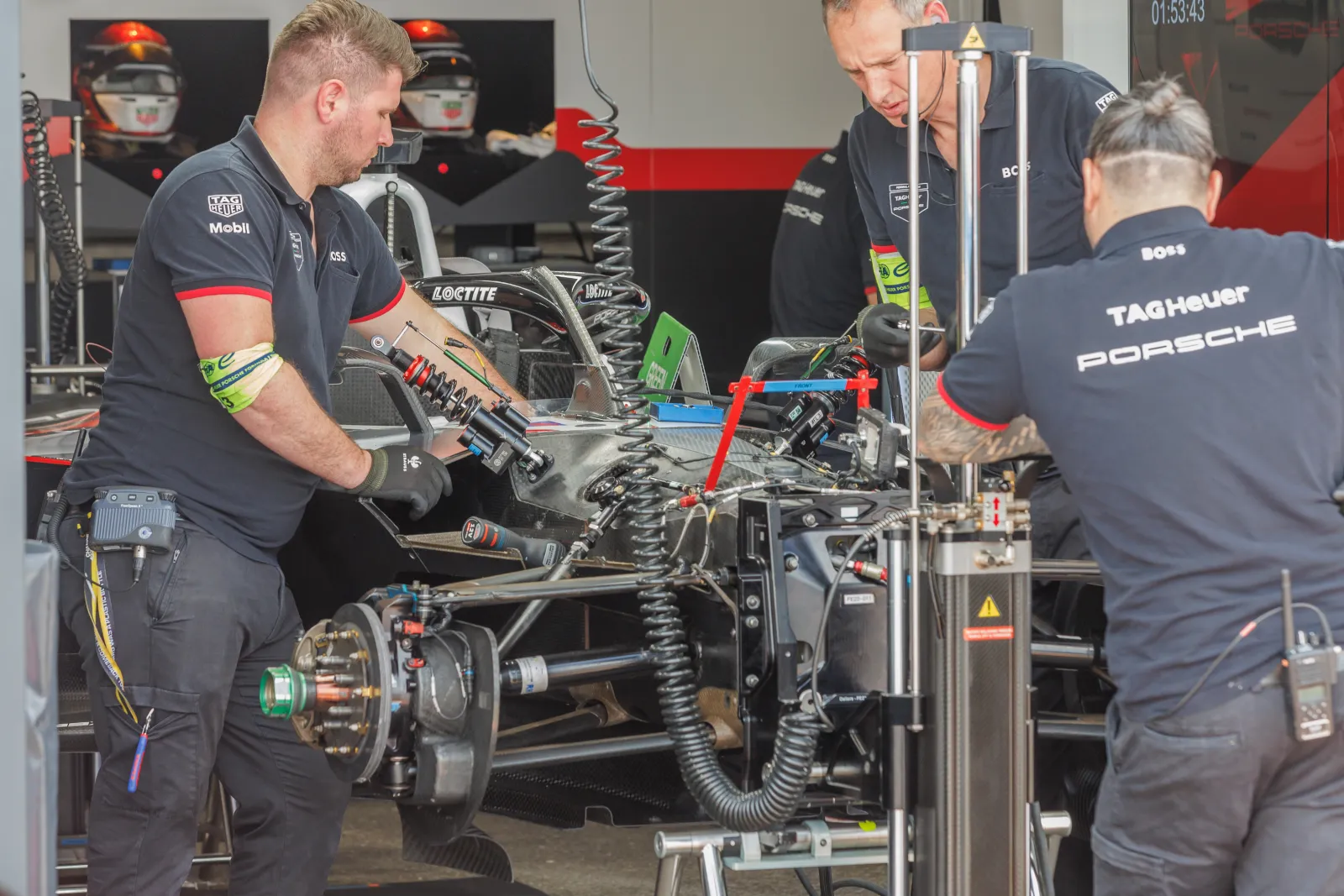
Two motors, two driven axles and active differentials at both ends make a genuinely different car to drive. Dan Ticktum, who ran the Gen4 up the Goodwood hill on 9 to 12 July 2026, said in Formula E’s release: “The GEN4 is 50% more powerful in race mode than the current cars, handles like an absolute weapon with that permanent all-wheel drive, and it’s ready to fly up the hill.” He would say that. The traction claim is the believable part, because what made Formula E starts look messy on a damp Tempelhof grid was 350 kW going through two cold rear tyres.
Formula E puts the launch about 30 per cent ahead of a Formula 1 car’s, with 0 to 100 km/h in roughly 1.8 seconds. That is the one number where an electric single-seater beats the fastest thing in motorsport outright.
Two race formats on the same weekend
The FIA’s World Motor Sport Council signed off the 2026-27 rules in Macau on 23 June 2026, and doubleheaders now run two different races. The classic E-Prix stays at 45 minutes on the low-downforce aero package, with eight minutes of Attack Mode and the mandatory Pit Boost charging stop. The new E-Prix Unleashed is a 30-minute sprint on high downforce, six minutes of Attack Mode, no pit stop.
Pit Boost survives, with the energy added during the stop rising about five per cent, from 3.85 kWh to 4.05 kWh. Race charging has come a long way while road cars still argue about which plug goes on the back of a 2027 EV. Qualifying pays championship points for the first time, up to five for a pole-sitter who wins every Duel, and each event’s aero configuration is confirmed 21 days beforehand, per the FIA’s World Motor Sport Council release.
My honest read: the sprint is the interesting one. Formula E’s energy-saving races have produced some of the best racing in motorsport and some of the most confusing television ever broadcast, often on the same afternoon. One race where the car runs flat out gives a new viewer something to follow without a lift-and-coast explainer.
When does Formula E season 13 start, and where does it go?
Season 13 opens with a night doubleheader on the Jeddah Corniche Circuit on 18 and 19 December 2026. Before that, teams get five days of pre-season testing at the Circuito de Madrid Jarama-RACE from 16 to 20 November 2026, which moves the test away from Valencia’s Ricardo Tormo for the first time since 2017.
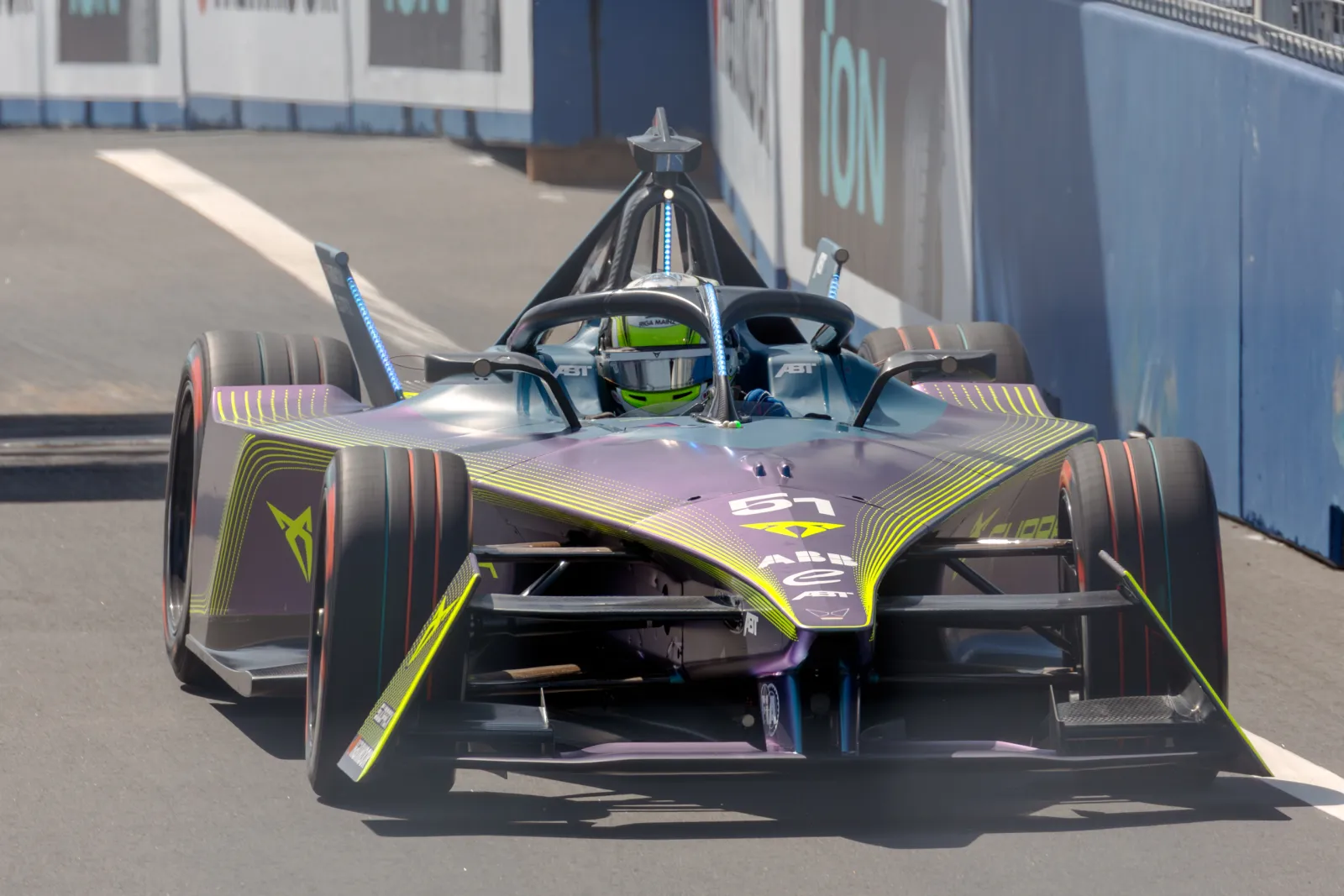
The 21-race calendar covers 13 cities. The dates worth writing down:
- Jeddah, 18 and 19 December 2026, rounds 1 and 2, under lights
- Mexico City on 16 January, Austin on 6 February, Miami on 20 February 2027
- São Paulo, 13 March 2027, and Sanya on 17 April
- Berlin, 8 and 9 May 2027, then Monaco on 15 and 16 May
- Brands Hatch, 29 and 30 May 2027, the London round’s new home
- Zandvoort, 18 and 19 June, and Madrid’s Jarama on 26 and 27 June 2027
- Shanghai, 10 and 11 July, then the Tokyo finale on 24 and 25 July 2027
Austin and Zandvoort are new, both permanent circuits with real corners and real run-off, which should suit the low-downforce car. London leaves the ExCeL car park for Brands Hatch. If you need something to watch before December, the 2026 WEC Hypercar title fight finishes first.
Who is on the grid for the Gen4 era
Seven manufacturers are signed up for Gen4: Jaguar, Porsche, Nissan, Citroën, Opel, Mahindra and Lola Yamaha, across 12 teams. Nissan supplies Andretti with customer powertrains on a multi-year deal. Stellantis has moved its works effort from DS to Opel, and DS’s partnership with Penske has ended.
The biggest move of the winter is Mitch Evans leaving Jaguar after a decade to lead the new Opel GSE team, alongside 2023 Formula 2 champion Théo Pourchaire on his Formula E debut, with Sophia Flörsch as test driver. Nissan keeps season 11 champion Oliver Rowland and has signed Zane Maloney. Lucas di Grassi, the 2016-17 champion, has retired.
Whether the racing gets better is a different question from whether the car is faster, and Formula E has confused the two before. But 600 kW through four wheels on a street circuit, with a 30-minute sprint on the Saturday, is the most convincing pitch the series has made in years. Set it against the 2026 WRC title decider and you can see motorsport splitting into series that chase speed and series that chase closeness.
FAQ
When does Formula E season 13 start?
Formula E season 13 starts on 18 December 2026 with a night doubleheader on the Jeddah Corniche Circuit in Saudi Arabia, with rounds 1 and 2 on consecutive days. Pre-season testing runs first, at Jarama near Madrid from 16 to 20 November 2026. The season closes in Tokyo on 25 July 2027.
What does the Formula E season 13 calendar 2027 look like?
After the December 2026 opener in Jeddah, the Formula E season 13 calendar 2027 runs from January to July. It takes in Mexico City, Austin, Miami, São Paulo, Sanya, Berlin, Monaco, Brands Hatch, Zandvoort, Madrid, Shanghai and Tokyo: 21 races across 13 cities, with seven doubleheader weekends after Jeddah.
Does the Gen4 Formula E car have all-wheel drive?
Yes. The Gen4 is the first Formula E car with permanent all-wheel drive. A front motor of up to 250 kW works with a 350 kW rear motor at all times, rather than only during qualifying, race starts and Attack Mode as on the Gen3 Evo. Both axles also get active differentials.
Is the Gen4 car faster than a Formula 1 car?
Off the line, yes: Formula E quotes 0 to 100 km/h in about 1.8 seconds, roughly 30 per cent quicker than a current F1 car. Over a lap, no. The Gen4 peaks at 600 kW against about 750 kW for a 2026 F1 car, weighs 954 kg without a driver against 724 kg plus tyres, and tops out at 335 km/h.
About this article: figures checked on 16 September 2026 against the Gen4 fact sheet and sporting format explainer on fiaformulae.com, the FIA World Motor Sport Council release of 23 June 2026 on fia.com, and the FIA 2026 Formula 1 technical regulations. Season 13 had not begun at the time of writing.