
Advertisement
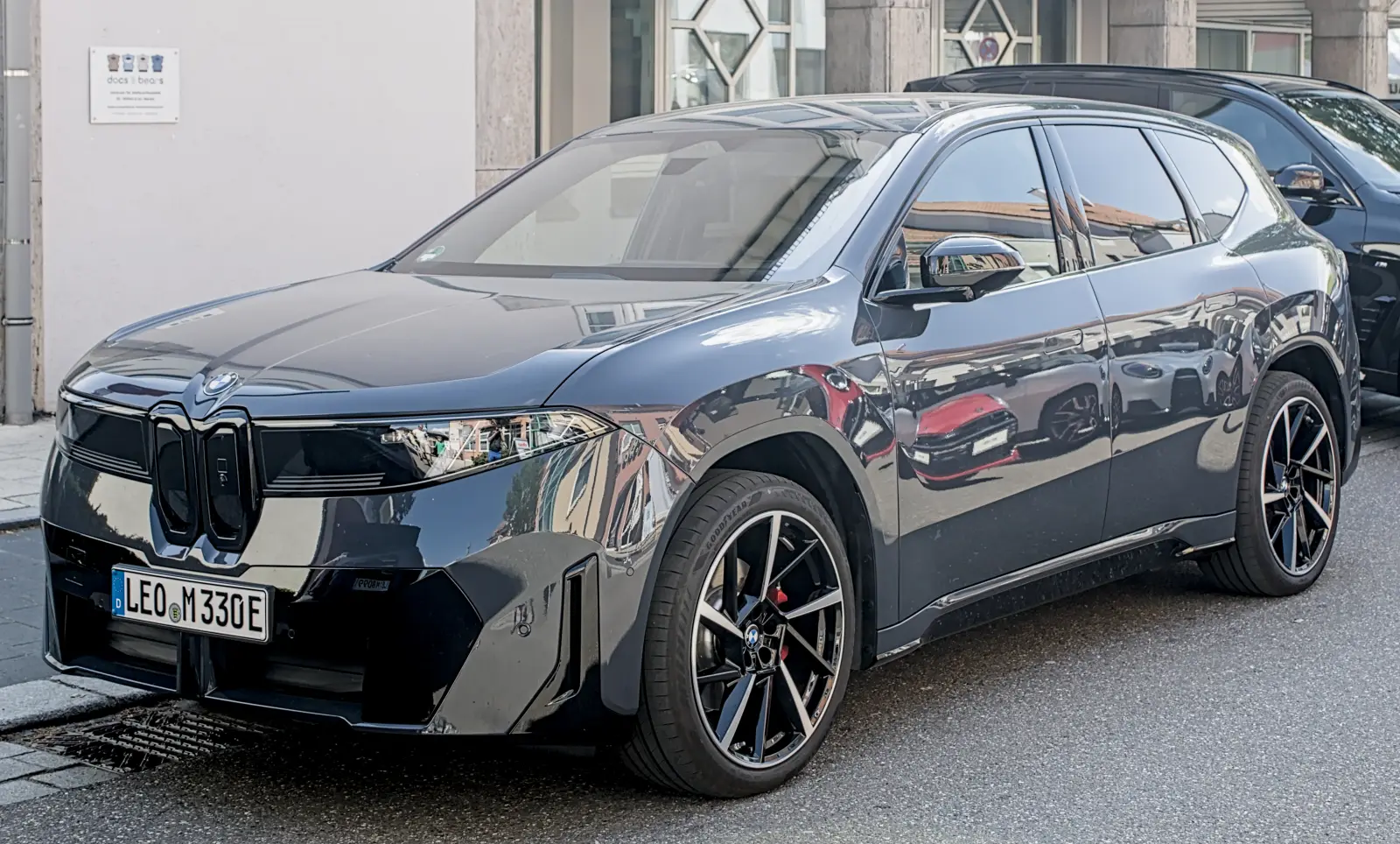
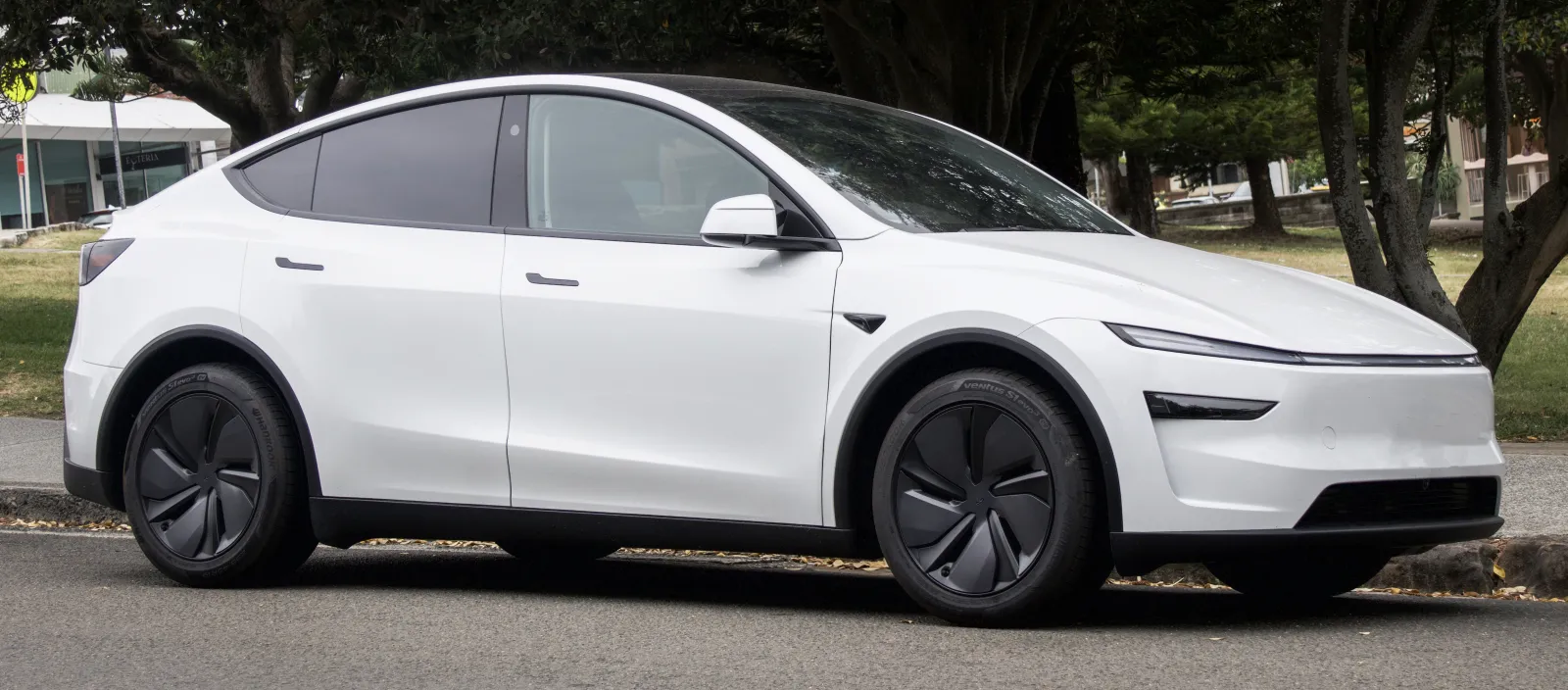
The 2027 BMW iX3 50 xDrive is EPA-rated at up to 434 miles. The longest-legged Tesla Model Y, the Premium rear-drive, gets 357, and the dual-motor Premium AWD that most iX3 shoppers will actually cross-shop gets 327. So with BMW iX3 50 vs Tesla Model Y range compared on a like-for-like all-wheel-drive basis, the German car wins by 107 miles. The charging gap is bigger, and that is where your day actually gets shorter.
The short version
The 2027 BMW iX3 50 xDrive costs $62,850 with destination, charges from 10 to 80 percent in 21 minutes, and is EPA-rated at 383 miles on its standard all-season tires or 434 miles on the no-cost summer set. A Tesla Model Y Premium AWD costs $51,630 with fees, does 327 miles, and needs roughly 31 minutes for the same charge.
How much does the 2027 BMW iX3 cost?
BMW’s US press release, dated 7 May 2026, puts the iX3 50 xDrive at $61,500 plus $1,350 destination and handling. That is $62,850 out the door before tax and options, and the configurator on bmwusa.com has been live since that morning, with a $1,000 refundable reservation. Tick every box (glass roof, heated wheel, 3D head-up display, Harman/Kardon audio, the M-badged bits) and InsideEVs found the total runs to about $82,000.
Tesla’s numbers, checked on 16 September 2026, are unchanged since the company raised Premium trim prices by $1,000 on 16 May 2026. Model Y Standard RWD is $39,990, Standard AWD $41,990, Premium RWD $45,990, Premium AWD $49,990 and Performance AWD $57,990. Add $1,390 destination and a $250 order fee to all of them.
Quote all of that without a federal credit, because there isn’t one. The $7,500 new-EV credit died on 30 September 2025 and nothing replaced it at the federal level, though a few states still pay. If you are trying to work out what survived, we went through it in our guide to what is left of EV incentives in 2026.
One line item before you sign: the CCS adapter is free, but the vehicle-to-home dongle that lets the iX3 run your house is a $350 accessory and your panel has to be wired for a generator input.
BMW iX3 50 vs Tesla Model Y range compared, number by number
Every figure below comes from the EPA’s own database on fueleconomy.gov, not a manufacturer brochure. I have included the highway column because that is the one that decides how often you stop on I-95, and it is where both cars look worse than their headline.
| BMW iX3 50 xDrive | Model Y Premium AWD | Model Y Premium RWD | |
|---|---|---|---|
| Price before fees | $61,500 | $49,990 | $45,990 |
| Price with destination and fees | $62,850 | $51,630 | $47,630 |
| EPA combined range | 434 mi (20in summer), 383 mi (20in all-season) | 327 mi | 357 mi |
| EPA highway range | 405 mi, 363 mi | 305 mi | 327 mi |
| EPA combined MPGe | 118, 102 | 123 | 134 |
| Peak DC charging | 400 kW | 250 kW | 250 kW |
| 10 to 80 percent | 21 min | about 31 min (est.) | 31 min 14 s (measured) |
Two things jump out. The Model Y is the more efficient car, 123 MPGe against 118 for the BMW on its best tires and 102 on the ones it ships with. BMW gets its range from mass, with 112.2 kWh of usable battery in US trim. On pace the AWD cars are level, 4.7 seconds to 60 mph against Tesla’s claimed 4.6.
BMW iX3 50 xDrive EPA range changes with the wheels
The 434-mile number only applies to one configuration: 20-inch wheels with summer tires, a no-cost option. Standard is the 20-inch all-season set at 383 miles. The 21-inch all-seasons return 399, the 21-inch summers 398, and the 22-inch summers 392. Ticking a free box is worth 51 miles.
Real-world testing backs the pattern. On 14 September 2026, Bjorn Nyland drove an iX3 749 km (465 miles) at 90 km/h on 12.9 kWh per 100 km, the best result in a database of several hundred cars. His April run on 21-inch wheels with Goodyear Eagle F1 tires managed 724 km. The only change was 20s wearing Hankook Ion Evo SUV rubber. Same car, 25 km more, and by his account it rode better and made less noise too.
Is the iX3 faster to charge than a Model Y?
Yes, by a wide margin, and the peak kW number undersells it. BMW quotes 400 kW peak, 10 to 80 percent in 21 minutes and up to 185 miles added in 10 minutes. Nyland measured the curve and it holds up: 400 kW at 10 percent state of charge, 353 kW at 33 percent, 284 kW at 53 percent, and still 120 kW at 80 percent.
The Model Y peaks at 250 kW and falls off a cliff. Ever Cars ran an instrumented 10 to 80 percent test on a 2026 Model Y RWD on 27 May 2026 and logged 31 minutes 14 seconds: 221 kW on the initial pull, below 100 kW by 47 percent, and down to 42 kW at the 80 percent mark. Average across the session was 116 kW. Tesla’s own claim for the Premium AWD is up to 169 miles in 15 minutes, which the BMW beats inside 10.
Where the BMW’s advantage disappears
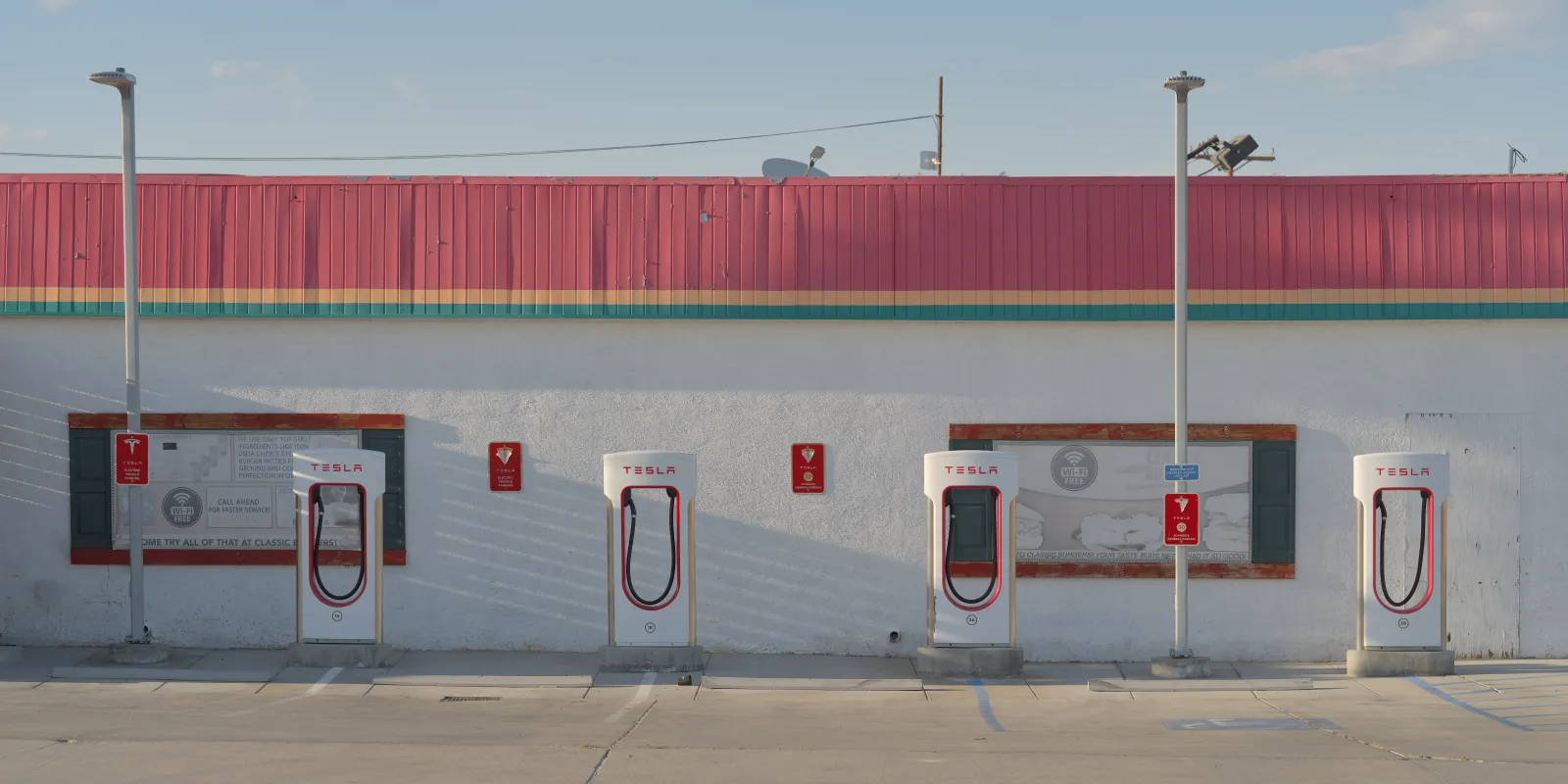
The iX3 plugs straight into a Supercharger with no adapter, the way a growing number of 2027 EVs with factory NACS ports now do. But nearly every Supercharger is a 400-volt site, and an 800-volt car there has to step the voltage down. Nyland saw about 170 kW on a Tesla stall. That is the best he has recorded for any 800-volt car on a 400-volt charger (Korean E-GMP cars manage roughly 100 kW), and a long way from 400.
Tesla’s 500 kW V4 cabinets fix this, and every new Supercharger site built since March 2026 uses them. The catch is arithmetic: as of late March 2026 only four true V4 sites were running in the entire US, in Redwood City, Taylorsville, Nashville and Kissimmee. To see the iX3 at full chat today you need a 350 kW or 400 kW unit that can push more than 500 amps, which means Ionna or the better Electrify America pedestals.
What the gap looks like on a 621-mile drive
Nyland’s 1,000 km challenge is the closest thing to a standardised road-trip test, and both cars have run it. The iX3’s best is 8 hours 49 minutes, set this month. An earlier attempt in near-freezing weather needed only two charging stops and still came in at 8 hours 55 minutes. The refreshed Model Y Long Range did the same distance in 9 hours 25 minutes in June 2025, hitting 225 kW at its first plug-in outside Gothenburg after 330 km.
Thirty-six minutes over 621 miles. Call it six minutes per hundred. On a Friday run from Boston to Washington that is one stop saved. On a 40-mile commute you would never notice it, and you would have paid $11,000 for the privilege. How you feel about that depends on how often you drive more than 300 miles in a day.
Which one should you buy?
Buy the Model Y if the money matters, and I do not mean that as a backhanded compliment. Premium RWD at $47,630 with fees gives you 357 EPA miles, 134 MPGe and a charging network built around your car rather than tolerating it, for $15,000 less than the BMW. That is a second car’s worth of deposit.
Buy the iX3 if you drive long distances often and you care how the car feels doing it. You get 463 hp, the pillar-to-pillar Panoramic iDrive display, proper material quality, and a 400 kW ceiling that will matter more every year as 800-volt chargers spread. It is the better machine. It is also the one you have to work harder to charge quickly.
If neither budget lands, the third option is to wait. Rivian’s R2 is aimed squarely between these two, and we looked at whether the R2 is worth holding out for.
FAQ
When does the BMW iX3 arrive in the US?
BMW’s US retail launch date for the 2027 iX3 50 xDrive is 25 September 2026, nine days from now. Reservations with a $1,000 deposit and the full configurator have been live on bmwusa.com since 7 May 2026. It is sold as a 2027 model year car despite arriving in late 2026, which is normal for a mid-calendar launch.
How much does the 2027 BMW iX3 cost with destination?
$62,850. That is BMW’s $61,500 base price plus $1,350 destination and handling, before tax, registration and options. A heavily optioned car reaches roughly $82,000. There is no federal EV tax credit to subtract, as the $7,500 credit ended on 30 September 2025, so the sticker is the sticker.
Can the BMW iX3 charge at Tesla Superchargers?
Yes. The US iX3 has a factory NACS port, so it plugs into Superchargers without an adapter and BMW supplies a CCS adapter free for everything else. Expect around 170 kW at a standard 400-volt Supercharger rather than the 400 kW headline, which needs an 800-volt station capable of more than 500 amps.
Is the iX3 faster to charge than a Model Y in the real world?
Yes. BMW’s 21-minute 10 to 80 percent figure was matched in independent testing, while a measured 2026 Model Y RWD took 31 minutes 14 seconds for the same window. Over a 621-mile drive the difference works out at about 36 minutes, most of which comes from the BMW’s flatter charging curve rather than its peak.
About this article: prices, EPA range and charging figures were checked on 16 September 2026 against BMW of North America’s 7 May 2026 pricing release, the EPA’s fueleconomy.gov entries for the 2027 iX3 50 xDrive and 2026 Model Y, Electrek, Ever Cars’ instrumented charging test and Bjorn Nyland’s results via BMWBlog. Tesla changes prices without notice, so check the Model Y figure on the day you order.