
Advertisement
Is there still an EV tax credit in 2026? Not from the IRS, and not for buying a car. The $7,500 credit on a new electric vehicle, the $4,000 credit on a used one and the commercial credit that made EV leases absurdly cheap all stopped applying to vehicles acquired after 30 September 2025. What took their place is a deduction for car loan interest worth roughly a quarter as much, and only on vehicles with final assembly in the United States. The rest of the money now comes from your state.
The short version
There is no federal EV purchase tax credit in 2026. Sections 30D, 25E and 45W all stopped applying to vehicles acquired after 30 September 2025. The only federal money left for a car buyer is a deduction of up to $10,000 a year in interest on a loan for a new, US-assembled vehicle, and it phases out above $100,000 of income.
Is there still an EV tax credit in 2026? Not from the IRS
The IRS page for the new clean vehicle credit now carries a one-line obituary: “The New Clean Vehicle Credit is not available for vehicles acquired after Sept. 30, 2025.” The same sentence, with “Previously-Owned” swapped in, sits on the used clean vehicle credit page. Both were checked as of 16 September 2026.
There is one leftover. The IRS treats a vehicle as acquired on the date you signed a binding written contract and made a payment, so a car ordered with a deposit before that deadline can still carry a credit even if it was delivered this year. That is a thin group by now, mostly slow-building trucks. If you are shopping today, it does not apply to you.
When did the $7,500 EV tax credit end?
It ended on 30 September 2025, killed by the One, Big, Beautiful Bill Act, Public Law 119-21, signed on 4 July 2025. The Inflation Reduction Act had scheduled those credits to run to the end of 2032, so the law cut seven years off the clock with about twelve weeks of notice.
Buyers reacted as you would expect. EV share of the US market spiked to roughly 11 percent in the rush quarter before the deadline, fell to 5.2 percent in the first quarter of 2026, then recovered to 6.3 percent in the second. What made the loss sting was the delivery mechanism: since January 2024 dealers could hand the $7,500 over at the point of sale, so it behaved like a discount on the window sticker rather than a refund fourteen months later. Nothing in the current law behaves like that.
What replaced the federal EV tax credit
A deduction, not a credit, and the difference matters. The same law created a deduction for interest on a new-car loan for tax years 2025 through 2028, capped at $10,000 of interest a year. The vehicle must be new, for personal use, and have undergone final assembly in the United States. The loan must date from after 31 December 2024 and be secured by a lien on the car. You do not have to itemize, and you report the VIN on Schedule 1-A.
The income limits bite early. The deduction drops by $200 for every $1,000 of modified adjusted gross income above $100,000 single or $200,000 joint, which zeroes it out at $150,000 and $250,000. Leases do not count. The IRS is blunt about it: lease payments do not qualify. Used cars do not qualify either.
The car loan interest deduction, in real dollars
Here is the arithmetic on an average EV. Kelley Blue Book put the average new EV transaction price at $54,813 in August 2026. Put $10,000 down, finance $45,000 at 6.35 percent (Experian’s average new-car rate for the second quarter of 2026) over 72 months, and you pay $2,674 in interest in the first year. At a 22 percent marginal rate that deduction is worth about $588. Over the full 2025 to 2028 window the interest totals $8,090, so about $1,780 back.
Roughly $1,800 spread across four tax returns, against $7,500 taken off the price the day you signed. And it pays more to people with higher incomes and bigger loans, right up until the phase-out cuts them off. In the 12 percent bracket the same loan returns about $320 in year one.
The home charger credit closed on 30 June 2026
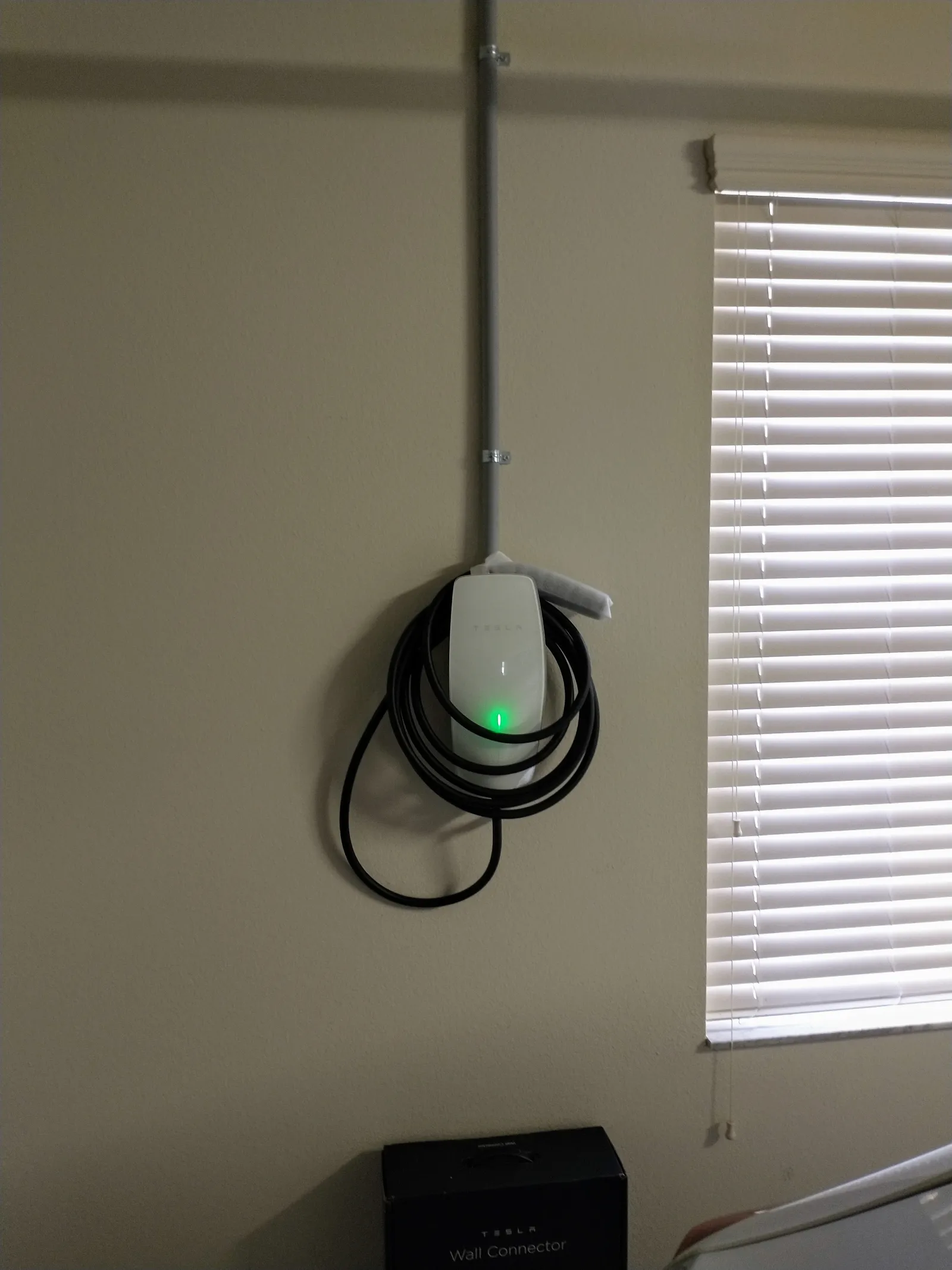
Section 30C paid 30 percent of a home charger and its installation, capped at $1,000, and only if your address sat in a qualifying low-income or non-urban census tract. The IRS window for property placed in service ran to 30 June 2026 and has now shut. If your electrician finished the job and energized the unit before that date, you still claim it on Form 8911 with the return you file next spring. A quote or a deposit does not count. Our guide to the home charger credit deadline has the tract lookup.
What a 2025 EV buyer got versus what a 2026 buyer gets
| Federal incentive | 2025 buyer | 2026 buyer |
|---|---|---|
| New EV credit (Sec. 30D) | Up to $7,500, applied at the dealer | $0 |
| Used EV credit (Sec. 25E) | 30% of the price, up to $4,000 | $0 |
| Lease pass-through (Sec. 45W) | Up to $7,500 into the capitalized cost | $0 |
| Home charger (Sec. 30C) | 30% of cost, up to $1,000 | $0 for anything installed after 30 June 2026 |
| Car loan interest deduction | Up to $10,000 of interest | Up to $10,000 of interest |
| First-year value, $45,000 loan on a new EV | About $7,500 | About $588 at a 22% marginal rate |
For a used EV the gap is starker. The $4,000 credit is gone and the deduction excludes used vehicles, so a 2026 used-EV buyer gets nothing federal at all. Used EV sales rose anyway, because three-year-old EVs are now genuinely cheap.
Does leasing an EV still get a tax credit?
No. The lease deals that dominated 2024 and 2025 ran on Section 45W, the commercial clean vehicle credit. A leasing company owned the car, claimed up to $7,500 as a business, and passed it through as a capitalized cost reduction. Because 45W skipped the battery sourcing and assembly tests that applied to retail buyers, foreign-built EVs that could never qualify for 30D were leasing for $199 a month.
That credit died on the same date as the other two. Manufacturers now fund lease support from their own marketing budgets, which is real money but not a tax credit and not guaranteed. Cox Automotive put EV incentive spending at 12 percent of average transaction price in August 2026, against 6.5 percent industry-wide and 14.6 percent a year earlier. Read the lease worksheet, not the ad. Our piece on buying now with tariffs in play covers the other half of the price question.
EV state incentives 2026 list: where the money actually is
State programs are now the largest single number on most EV deals. They change constantly and several run out of cash mid-year, so check the program page before you sign. Figures below come from the Department of Energy’s Alternative Fuels Data Center and the administering agencies.
- Colorado: $750 state credit for a new EV or plug-in hybrid under $80,000, plus $2,500 more if the MSRP is $35,000 or less. It was $3,500 in 2025, so Colorado cut its own credit in the same year the federal one vanished. Details at the AFDC.
- New York: NYSERDA’s Drive Clean Rebate pays $2,000 for an EV with more than 200 miles of range, $1,000 for 40 to 199 miles, and only $500 if the MSRP is above $42,000.
- Illinois: $2,000 from the Illinois EPA on a new or used EV priced at or below $80,000, doubled to $4,000 for income-qualified applicants. You have 90 days from purchase and registration to apply, and one rebate per person per decade.
- Massachusetts: MOR-EV pays $3,500 on a new EV and $3,500 on a used one under $40,000, with $1,500 more for income-qualified buyers and $1,000 for trading in a combustion car. The rebates stack and can be taken at the point of sale.
Utility rebates are the quiet extra. Plenty of co-ops and municipal utilities still pay a few hundred dollars toward a Level 2 charger, and the federal changes left those alone.
FAQ
Can I still claim the $7,500 credit if my EV was delivered in 2026?
Only if you acquired it on or before 30 September 2025, which the IRS defines as a binding written contract plus a payment by that date. Delivery timing does not matter; the contract date does. If you walked into a showroom in 2026 and signed, there is no credit, regardless of what the salesperson implies.
Do used EVs get anything in 2026?
Nothing federal. The $4,000 used clean vehicle credit under Section 25E ended for vehicles acquired after 30 September 2025, and the new car loan interest deduction applies only to new vehicles. State programs are the exception: Illinois and Massachusetts both pay on used EVs, and several utilities do too.
Which EVs qualify for the car loan interest deduction?
Any new passenger vehicle with final assembly in the United States, electric or otherwise. Check the Monroney sticker on the window for the line reading Final Assembly Point, or run the VIN through the NHTSA decoder. A Rivian R1T built in Normal, Illinois qualifies. A Chevrolet Equinox EV built in Ramos Arizpe, Mexico does not. Trims of the same model can differ.
Is the federal EV tax credit coming back?
Nothing on the books says so. Public Law 119-21 repealed the credits outright rather than letting them lapse, and restoring them would take new legislation. The loan interest deduction itself expires after tax year 2028 unless Congress extends it, so plan on what exists today rather than what might return. Our breakdown of how the auto loan interest deduction works goes through the filing mechanics.
About this article: amounts, end dates and eligibility rules were checked on 16 September 2026 against the IRS pages for the new clean vehicle credit, the used credit and the refueling property credit, IRS guidance on the car loan interest deduction, the Department of Energy’s Alternative Fuels Data Center, NYSERDA, and Cox Automotive’s August 2026 transaction price report. The dollar examples are illustrations, not advice: what a deduction is worth depends on your marginal rate, your income and your loan, so check your own tax situation with a preparer before counting on it.