
Advertisement
Can I still claim the home EV charger tax credit? Yes, but only if the charger was actually working by 30 June 2026, and only on the 2026 return you file next spring. The One Big Beautiful Bill Act killed section 30C for anything placed in service after that date. If your electrician energized the box on 1 July or later, there is no federal credit left to chase.
The short version
The federal 30C credit paid 30 percent of a home charger’s cost, up to $1,000, and it died for property placed in service after 30 June 2026. If your charger was operational by that date and sits in an eligible census tract, file Form 8911 with your 2026 return. Later installs get nothing federal.
Can I still claim the home EV charger tax credit?
Only for a charger that was operational on or before 30 June 2026, at your main home, in an eligible census tract. The claim goes on Form 8911 filed with your 2026 Form 1040, due in April 2027, and it is a 2026 credit even if you ordered the hardware two years earlier. Nothing turns a July install into a qualifying one, and there is no pending extension.
When did the 30C EV charger credit expire?
On 30 June 2026. The credit is section 30C, the Alternative Fuel Vehicle Refueling Property Credit, and the Inflation Reduction Act had it running to the end of 2032. Public Law 119-21, signed on 4 July 2025, moved the guillotine forward by more than six years.
The IRS says it plainly in the December 2025 instructions for Form 8911: “You can’t claim the credit for alternative fuel vehicle refueling property placed in service after June 30, 2026.” No phase-down, no grandfathering for orders placed in May.
What “placed in service” actually means
This is the part people get wrong, and it is the only date the form asks for. Not the day you ordered, not the day you paid, not the day the box landed on your porch. The instructions define it as the moment property “is ready and available for a specific use, regardless of whether or not it is actually used at the time,” then give the exact example you need: “an EV charger installed at an individual taxpayer’s principal residence will be placed in service when it is operational.”
Operational means the breaker is on and the unit will deliver current. If your town wanted an inspection before the circuit went live and the inspector did not sign off until July, you have a problem. Dig out the permit card and the installer’s commissioning record. Line 5 of Schedule A (Form 8911) asks for that date and nothing else.
How much was the home charger tax credit worth?
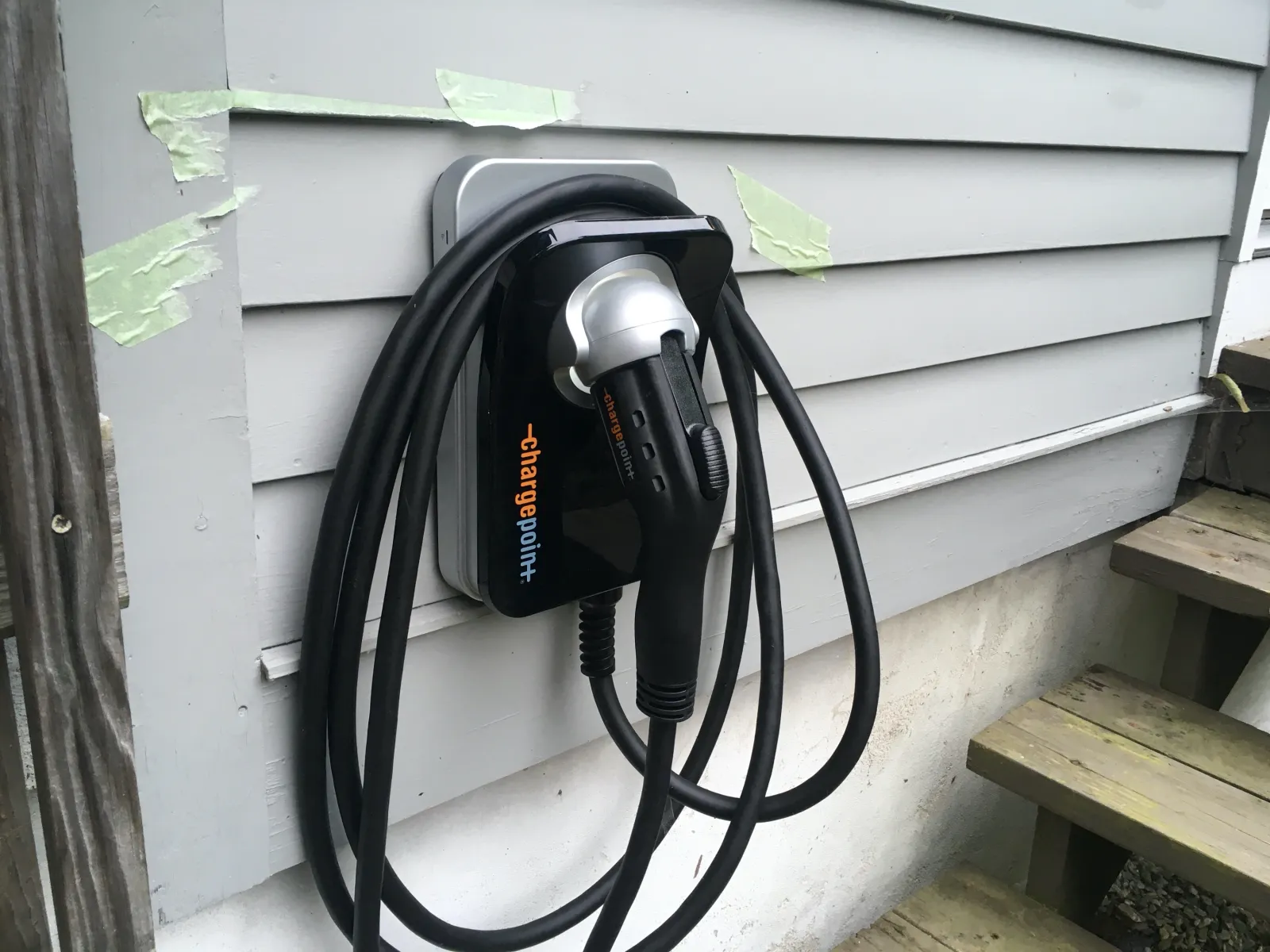
For a personal charger at your main home, 30 percent of the cost, capped at $1,000 for each single item of qualified property, which is the figure on the IRS page for individuals. A charging port counts as an item. You hit the $1,000 ceiling at $3,333 of qualifying spend, which most installs clear: Qmerit’s 2026 figures put a Level 2 job at $749 to $2,500, average $1,700, with a panel upgrade adding $1,500 to $3,000.
| Your situation | Credit rate | Cap per item | Last placed-in-service date | Where it goes |
|---|---|---|---|---|
| Personal charger at your main home | 30% | $1,000 | 30 June 2026 | Form 8911, personal part, 2026 Form 1040 |
| Business or investment use, no wage and apprenticeship rules met | 6% | $100,000 | 30 June 2026 | Form 8911, general business credit |
| Business use meeting prevailing wage and apprenticeship rules | 30% | $100,000 | 30 June 2026 | Form 8911 plus a Form 7220 per property |
| Anything energized on or after 1 July 2026 | None | None | Expired | Nothing to file |
Two catches. The credit is nonrefundable and capped by your tax liability, and the IRS is blunt about the remainder: “If you can’t use part of the personal portion of the credit because of the tax liability limit, the unused credit is lost.” And the original use of the property has to begin with you, so a unit the previous owner left on the garage wall does not count.
Which addresses qualify for the 30C credit
Since 2023 the charger has to sit in an eligible census tract, and that trips up more suburban homeowners than the deadline does. Two ways in, and you need only one. A low-income community tract under section 45D(e): poverty rate of at least 20 percent, or median family income at or below 80 percent of the relevant statewide or metro figure. Or a non-urban tract, which Treasury defines in Notice 2024-20 as any 2020 census tract where at least 10 percent of the census blocks were not designated urban.
Treasury’s September 2024 announcement put roughly two-thirds of Americans in an eligible tract, which still leaves plenty of inner-ring suburbs out. The quick check is the Department of Energy’s 30C Tax Credit Eligibility Locator, built by Argonne National Laboratory, where you type the street address into the search box and it tells you yes or no. Read Argonne’s own caveat before you rely on it: the map “may not be relied upon by taxpayers to substantiate a tax return position and will not be used by the IRS for examination purposes.”
What the IRS accepts is the paper trail. Run your address through the Census Bureau’s 2020 Census Tract Identifier for the 11-digit GEOID, then look that number up in Appendix B, the IRS list of eligible 2020-boundary tracts. If it is there, tick “Yes” on line 6a and write the GEOID on line 6b. If it is not, the charger was never qualified property, deadline or no deadline.
Can I claim the charger credit on a rental property?
Not as a personal credit, no. The IRS conditions the 30 percent personal version on one thing: “If the property isn’t business/investment use property, the property must be installed on property used as your main home.” A house you rent out is not your main home, and a second home or holiday place is not either.
A landlord who wired a charger for tenants sat in the business column: 6 percent of cost up to $100,000 per port, or 30 percent if the job met the prevailing wage and apprenticeship rules. Same expiry date, same census tract test. Nothing there survived 30 June 2026 either, whatever you read about the business credit running to 2032.
Renters are the murky case. The IRS test is written around your main home, not around who holds the deed, so a tenant who paid for the equipment, had original use of it and had the landlord’s written permission has an argument. It is not one I would make without a tax professional reading the invoices first, because the IRS has published no ruling on it.
What is left instead: state, utility and local rebates
This is where the money still is, and often better money, because a rebate is cash rather than a credit capped by your tax bill. Austin Energy pays 50 percent of the cost to buy and install a qualified Level 2 station, up to $1,200 for a Power Partner compatible setup or $900 otherwise, first come while funding lasts. Xcel Energy runs up to $500 across most of its territory, more for income-qualified customers. These attach to your utility, not your state, so two houses on opposite sides of a street can get different answers.
Start with your own utility’s EV page, then the DSIRE database at dsireusa.org, then the Alternative Fuels Data Center listing for the 30C credit and its state laws pages. Time-of-use rates are the other lever: moving a full overnight charge off peak can beat a one-off $1,000 credit over a few years. It is the same arithmetic behind preconditioning on shore power in January.
All of the above was checked against IRS and Department of Energy pages as of 16 September 2026. For the wider picture, see our rundown of what is left of the federal EV tax credits in 2026. If you are still car shopping, which 2027 models ship with a native NACS port decides which cable belongs on the wall.
FAQ
Does it matter when I paid for the charger?
No. The only date on Schedule A (Form 8911) is the placed-in-service date, and the IRS defines that as the day the charger became operational. A 2024 deposit still makes a 2026 credit if the unit was energized in 2026. Paying in June 2026 buys nothing if the power went on in July.
I installed in December 2025. Which return does it go on?
Your 2025 return, not your 2026 one. The credit belongs to the tax year the property was placed in service. If you already filed 2025 without it, amend with Form 1040-X and attach Form 8911. The same census tract test and $1,000 cap apply to that year.
Can I carry the unused credit forward to 2027?
Not the personal part. The instructions say the unused personal portion “can’t be carried back or forward to other tax years,” so if your 2026 tax liability is smaller than the credit, the difference simply disappears. The business portion behaves differently because it becomes part of the general business credit, which does have carryover rules.
Do I need the Argonne map result to file?
You do not attach it, and it will not defend you in an audit. The form wants the 11-digit GEOID from the Census Bureau tool, checked against the IRS Appendix B list. Use the Argonne locator as a fast first screen, then confirm the GEOID yourself and keep a dated screenshot of both.
About this article: the expiry date, the 30 percent and $1,000 personal limits, the placed-in-service definition and the census tract rules were checked on 16 September 2026 against the IRS instructions for Form 8911 (revised December 2025), the IRS page on the credit for individuals, IRS Notice 2024-20, the Alternative Fuels Data Center and Argonne National Laboratory’s 30C eligibility locator. Install costs come from Qmerit’s 2026 data, rebate figures from Austin Energy and Xcel Energy. This is general information, not tax advice. Your filing status, liability and address all change the answer, so check it with your own preparer.