
Advertisement
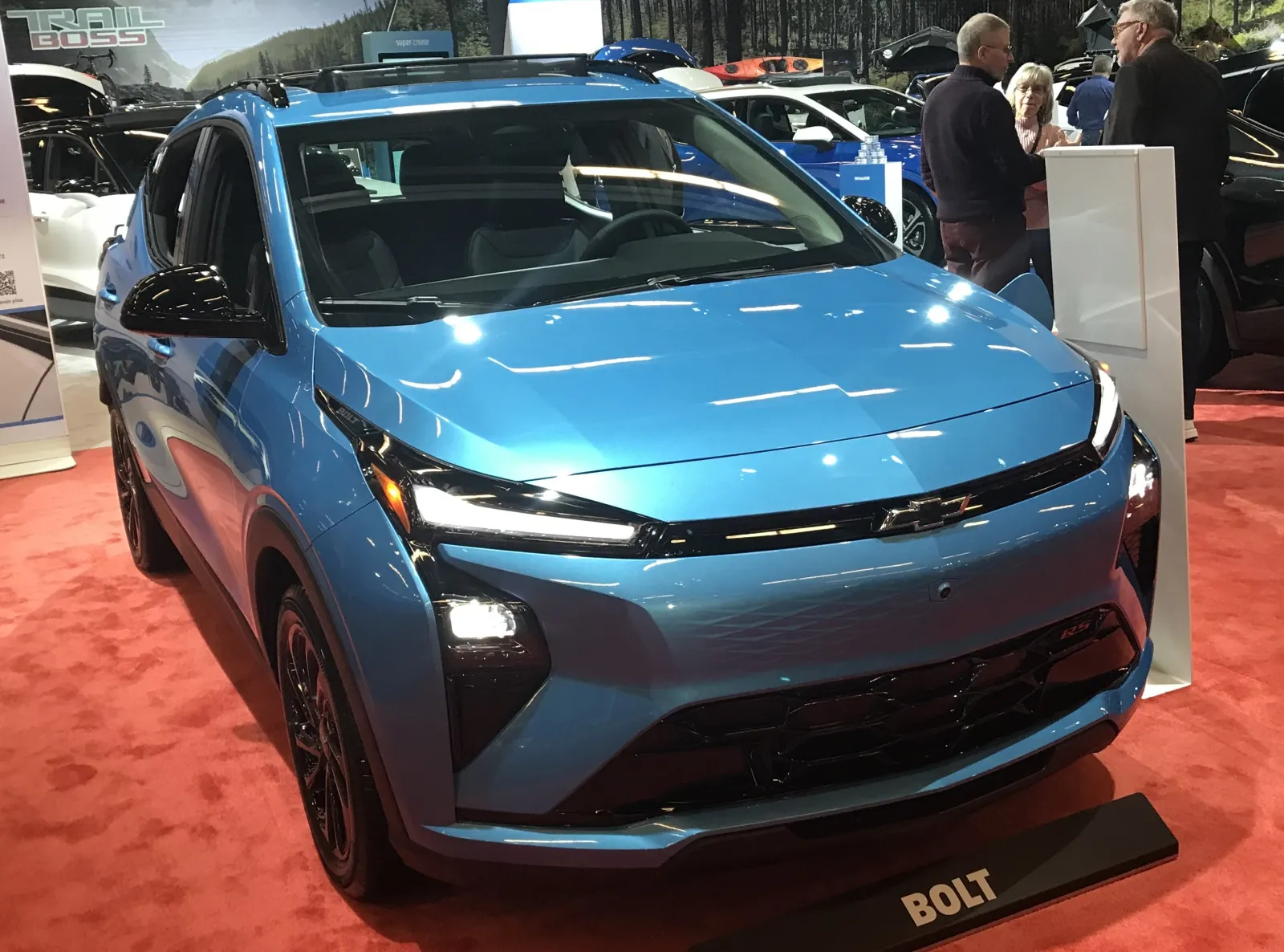
What changed for the 2027 Chevrolet Bolt is mostly under the skin. The battery went from nickel-based cells to lithium iron phosphate, the charge port is now a native NACS plug instead of CCS1, and peak DC fast charging climbed from roughly 55 kW to 150 kW. EPA range is 262 miles, three more than the 2023 Bolt EV managed. The price went up by $2,400 and the federal tax credit is gone, so it costs a lot more to put one in your driveway than it did in 2023.
The short version
The 2027 Chevrolet Bolt keeps the 65 kWh pack size and the tall hatchback shape, but swaps to LFP cells, a native NACS port and 150 kW DC charging. EPA range is 262 miles. The LT costs $28,995 with freight included. Torque, cargo space and phone mirroring all went backwards.
2027 Chevy Bolt price and range, trim by trim
GM’s press release for the car, updated with final specifications on 12 January 2026, lists a launch LT at $29,990 and a cheaper LT later in the year at $28,995. Both figures include the $1,395 destination freight charge, which is the part most people miss. The RS sits at $32,995 on the same basis ($31,600 plus freight).
Range is 262 miles on the EPA cycle for every trim, because the LT and the RS share the same 65 kWh pack and the same 210 hp motor. Nothing you tick on the order sheet changes the range figure, which was also true of the old car.
That $28,995 number is the whole argument for this car. The 2026 Nissan Leaf S+ is advertised from $29,990, but Nissan’s own pricing release puts destination and handling on top, up to $1,495 of it. Add that and the Leaf lands around $31,485. The Bolt is the only new EV in the United States you can order for under $30,000 with freight already in the number, as of 16 September 2026.
| Spec | 2023 Bolt EV 1LT | 2023 Bolt EUV | 2027 Bolt LT |
|---|---|---|---|
| Starting price (freight included) | $26,595 | $28,195 | $28,995 |
| EPA combined range | 259 miles | 247 miles | 262 miles |
| Battery | 65 kWh, nickel-based | 65 kWh, nickel-based | 65 kWh, LFP |
| Peak DC fast charging | about 55 kW | about 55 kW | 150 kW |
| Charge port | CCS1 | CCS1 | Native NACS |
| Power | 200 hp | 200 hp | 210 hp |
| Torque | 266 lb-ft | 266 lb-ft | 169 lb-ft |
| Length | 163.2 in | 169.5 in | 169.6 in |
| Wheelbase | 102.4 in | 105.3 in | 105.3 in |
| Cargo behind rear seat | 16.6 cu ft | 16.3 cu ft | 16.2 cu ft |
| Curb weight | 3,589 lb | 3,680 lb | 3,776 lb |
| Apple CarPlay / Android Auto | Standard | Standard | Not available |
Does the 2027 Bolt have a NACS port, and does it charge faster?
Yes to both, and this is the single change that matters most. The 2027 Bolt is the first Chevrolet built with a native NACS socket, sitting on the left front fender where the old CCS1 flap used to be. No adapter, no dongle rattling in the cargo area, and Tesla Superchargers open up without the hardware dance. If you want the wider picture on which cars made the switch this year, I’ve written about the 2027 EVs with native NACS ports separately.
GM quotes 150 kW peak and 10 to 80 percent in 25 minutes. The old Bolt topped out near 55 kW and then tapered hard, dropping to the low twenties by 70 percent, which is why a road trip in a 2023 car meant sitting at a charger for the better part of an hour. Charged EVs saw 119 kW sustained at 19 percent state of charge on its first drive, and another driver at the same launch event recorded 153 kW. That is real.
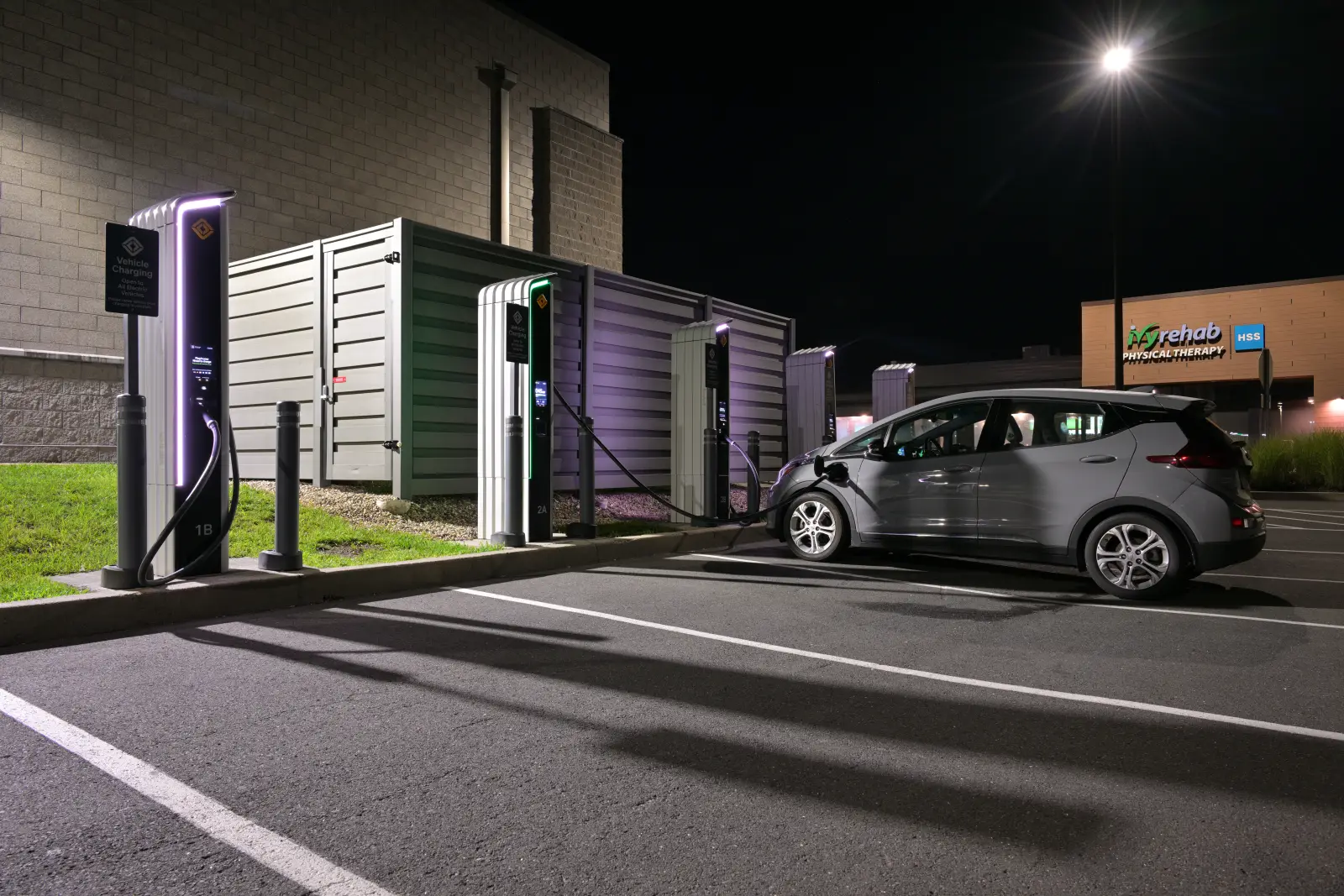
At home the numbers moved too. The onboard AC charger is 11.5 kW, good for about 40 miles of range per hour on a 240-volt circuit, against roughly 27 miles per hour on the 7.7 kW cord. And the Bolt can now push power back out: paired with a GM Energy Home System, it will run a properly wired house during an outage.
Real-world range holds up. Tom Moloughney’s 70 mph highway test for InsideEVs returned 243 miles and 3.6 miles per kWh on the New Jersey Turnpike, beating the EPA highway figure by 11 miles.
Is the 2027 Bolt bigger than the old one?
It depends which old one you mean, and the answer is the thing most shoppers get wrong. Against the 2023 Bolt EV hatchback, yes: the new car is 6.4 inches longer and rides on a wheelbase 2.9 inches longer. Against the 2023 Bolt EUV, it is essentially the same car by the tape measure, 169.6 inches against 169.5, on an identical 105.3-inch wheelbase.
So Chevrolet did not build a bigger Bolt. It built one Bolt on the EUV’s footprint and deleted the small one. If the compact hatchback was the reason you liked the 2023 car in a tight parking garage, that version no longer exists at any price.
Curb weight tells the rest of the story. The LT is 3,776 lb, about 187 lb heavier than a 2023 Bolt EV 1LT, mostly because LFP cells store less energy per kilogram than the nickel chemistry they replaced. GM kept the pack at 65 kWh and paid for it in mass.
What changed for the 2027 Chevrolet Bolt in the wrong direction
Plenty, and Chevrolet is not advertising any of it. Torque fell from 266 lb-ft to 169, a 36 percent cut, though shorter gearing means the new car still feels quicker off the line. Cargo space behind the rear seat is 16.2 cu ft against 16.6 in the old hatch. The 120-volt household outlet that used to live in the cargo area is gone. So is the regen-on-demand paddle behind the steering wheel, which was one of the nicest things about driving a Bolt in traffic.
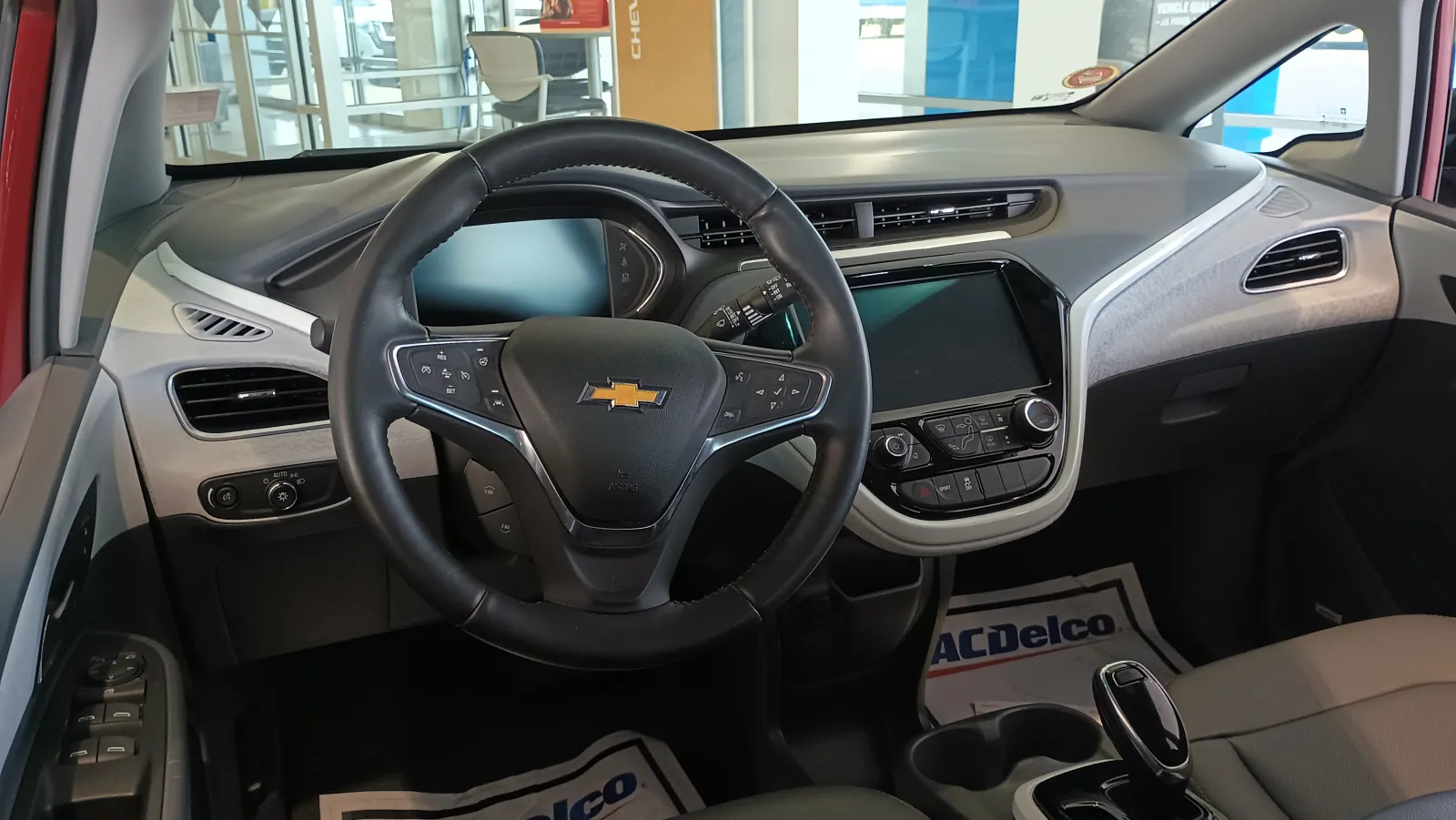
Then the infotainment. Apple CarPlay and Android Auto are not available on any 2027 Bolt, in line with GM’s policy across its EVs, and the replacement is Google built-in behind an OnStar plan that runs $35 a month after the trial. Adam Ismail put it bluntly in The Drive’s new-versus-old comparison in August 2026: there is no excuse for leaving CarPlay out. He also flagged the Normal regeneration setting, which grabs hard enough off-throttle to feel like someone else stepped on the brakes, and the column-mounted shift stalk, plus a power button for the screen that lives on the screen.
Ride quality is stiffer than the 2023 car over broken pavement. And the price. A 2023 Bolt EV cost $26,595 with freight and, for buyers who qualified, carried a $7,500 federal credit. That credit died on 30 September 2025 under the One Big Beautiful Bill Act, so the effective gap between the two cars is closer to $10,000 than $2,400. I’ve mapped out what is left of EV incentives in 2026 if you want to check your state.
2027 Chevrolet Bolt LT vs RS: which one to buy
The RS costs $4,000 more and changes nothing mechanical. Same 65 kWh pack, same 210 hp, same 262 miles, same 17-inch wheel size on the same Michelin 215/50R17 all-seasons. What you get is gloss-black wheels and roof rails, an RS grille badge, Evotex seating with red stitching, heated and ventilated front seats, a heated steering wheel, and access to Atomic Yellow paint.
Buy the LT. Heated seats can be had on it through the Evotex package for far less than four grand, and the RS money is better spent elsewhere or not at all. One caveat: if you want Super Cruise, it is a $3,255 option that also requires the Technology Package, which costs $1,695 on the LT and $1,195 on the RS. On an LT that is $4,950 on top, which is how Autoblog arrived at $34,940 for a Super Cruise LT, roughly base Equinox EV money for a smaller car with less range.
Buy soon if you want one. GM calls it a limited run, built at Fairfax Assembly in Kansas City, Kansas, with production expected to end during 2027. GM Authority’s tally puts second-quarter 2026 Bolt sales at 3,433 cars against roughly 4,500 sitting on dealer lots, so there is no urgency this month, but there will not be a 2028. If a hatchback this size is not quite enough car, the Rivian R2 is worth a look before you sign.
FAQ
What is the 2027 Chevy Bolt price and range?
The 2027 Chevrolet Bolt LT starts at $28,995 including the $1,395 destination charge, and the RS starts at $32,995 on the same basis. EPA-estimated range is 262 miles for both trims from a 65 kWh lithium iron phosphate battery. Those are the prices without any federal tax credit, which ended on 30 September 2025.
Does the 2027 Bolt have a NACS port?
Yes. The 2027 Bolt is the first Chevrolet with a native NACS charge port built into the car, on the left front fender, so it plugs into Tesla Superchargers without an adapter. The port handles both AC and DC charging. Peak DC speed is 150 kW, and GM quotes 10 to 80 percent in 25 minutes.
Is the 2027 Bolt bigger than the old one?
Bigger than the 2023 Bolt EV hatchback, yes: 169.6 inches long against 163.2, on a 105.3-inch wheelbase instead of 102.4. Against the 2023 Bolt EUV it is the same size within a tenth of an inch. Cargo space behind the rear seat is slightly smaller than either old model, at 16.2 cubic feet.
What is the difference between the 2027 Chevrolet Bolt LT and RS?
Appearance and comfort only. The RS adds $4,000 for gloss-black wheels and roof rails, an RS grille badge, Evotex seats with red stitching, heated and ventilated front seats, a heated steering wheel and Atomic Yellow paint. Battery, motor, range and charging speed are identical to the LT, so nothing about how it drives changes.
About this article: prices, EPA range, battery chemistry, charging figures and dimensions were checked on 16 September 2026 against GM’s own press release and specification sheet for the 2027 Bolt, the EPA’s fueleconomy.gov ratings for the 2023 Bolt EV and Bolt EUV, Nissan’s 2026 Leaf pricing release, and road tests published by InsideEVs, The Drive and Charged EVs. Figures for the previous Bolt refer to the 2023 model year, the last one built.