Advertisement
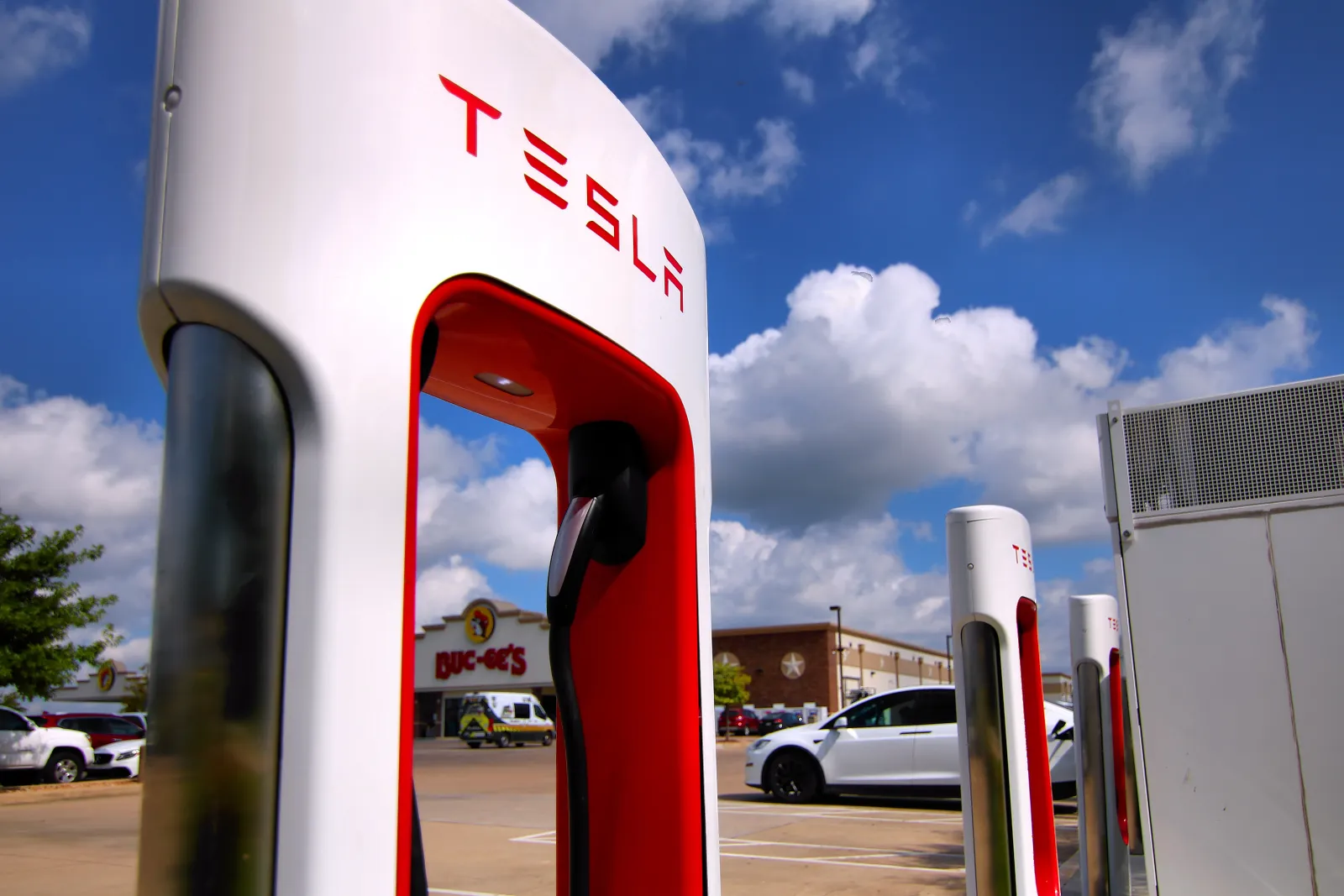
Which 2027 EVs have a native NACS port? Every electric Chevrolet, Cadillac and GMC, plus Rivian’s R1T and R1S, Hyundai’s Ioniq 5 and Ioniq 9, the Kia EV6 and EV9, the Nissan Leaf, the Toyota bZ, the Subaru Solterra, the Lucid Gravity, the Mercedes CLA, the BMW iX3 and the Dodge Charger Daytona. GM confirmed the last of its holdouts in a model-by-model list published on 13 August 2026. If you’re cross-shopping a Mustang Mach-E, a Honda Prologue or an Acura ZDX, you’re still carrying a dongle.
The short version
As of 16 September 2026, every 2027 model year EV from Chevrolet, Cadillac and GMC leaves the factory with a native NACS (SAE J3400) port. So do Rivian’s R1 range, Hyundai’s Ioniq models, the Kia EV6 and EV9, the 2026 Nissan Leaf, the Toyota bZ, the Subaru Solterra and the Lucid Gravity. Ford and Honda EVs still use CCS1 plus a paid adapter.
Which 2027 EVs have a native NACS port, and which still need an adapter
Three buckets. Native means the socket in the car’s flank is the NACS oval, so you park, pull the cable, push, and the charge starts. Adapter means the car has a CCS1 inlet and a lump of plastic lives in your frunk. Neither means the car speaks CHAdeMO, and no Supercharger anywhere will talk to it.
| Car | Port from the factory | What you still carry |
|---|---|---|
| Chevrolet Bolt, Blazer EV, Equinox EV, Silverado EV (2027) | NACS | NACS-to-CCS adapter for CCS-only stalls |
| Cadillac Optiq, Lyriq, Vistiq, Escalade IQ, Escalade IQL (2027) | NACS | Same |
| GMC Sierra EV, Hummer EV Pickup, Hummer EV SUV (2027) | NACS | Same |
| Rivian R1T, R1S, R2 (model year 2026 on) | NACS | Combo CCS1 DC adapter |
| Hyundai Ioniq 5, Ioniq 5 N, Ioniq 9 | NACS | CCS and J1772 adapters, supplied |
| Kia EV6 (2025 on), EV9 (2026 on) | NACS | CCS adapter |
| Nissan Leaf (2026 on) | NACS for DC, J1772 for AC | Nothing extra |
| Toyota bZ, Subaru Solterra (2026 on) | NACS | CCS adapter |
| Lucid Gravity | NACS | CCS1 and J1772 adapters, included |
| Mercedes CLA with EQ Technology | NACS for DC, J1772 for AC | Nothing extra |
| BMW iX3 50 xDrive (2027) | NACS | CCS adapter, included |
| Dodge Charger Daytona (2027) | NACS | AC adapter included, DC adapter costs extra |
| Ford Mustang Mach-E, F-150 Lightning, E-Transit | CCS1 | Ford NACS adapter, about $200 |
| Honda Prologue, Acura ZDX | CCS1 | Honda NACS-CCS adapter, $225 |
| Nissan Leaf through 2025 | CHAdeMO | No Supercharger access at any price |
Ford’s first native-port EV is announced rather than on sale. It’s the midsize pickup now named the Fathom, built on the Universal EV platform, with pre-orders opening in early 2027 at a starting MSRP of $28,350. Until that truck lands, every Ford EV on a dealer lot is a CCS1 car.
GM native NACS 2027 models: twelve cars in one go
GM’s charging status page of 13 August 2026 lists all twelve of its EVs with a tick in the 2027 column. For 2026 there is exactly one tick, next to the Cadillac Optiq. The ten models that still shipped with CCS1 this year are the Escalade IQ (465 miles of GM-estimated range), Escalade IQL (460), Lyriq (326 EPA), Vistiq (305 EPA), Blazer EV (312 EPA), Equinox EV (319), Silverado EV (478), Hummer EV Pickup (363), Hummer EV SUV (319) and Sierra EV (478).
The Bolt is the odd one out. It came back this year but is sold as a 2027 model, so it arrived with the NACS inlet and an EPA-estimated 262 miles, which is why it turns up in both halves of the story. I’ve written separately about what changed on the 2027 Bolt.
GM also bundled the plug change with a payment change. Energy Pass, built into the MyChevrolet, MyCadillac and MyGMC apps, covers registration and billing for Tesla Supercharger, IONNA, Electrify America and ChargePoint, with EVgo listed as coming. That matters more than it sounds. The old routine of standing in the rain toggling between four apps to find which one your card is on is the part of public charging people actually hate.
What a native port actually buys you, and what it doesn’t
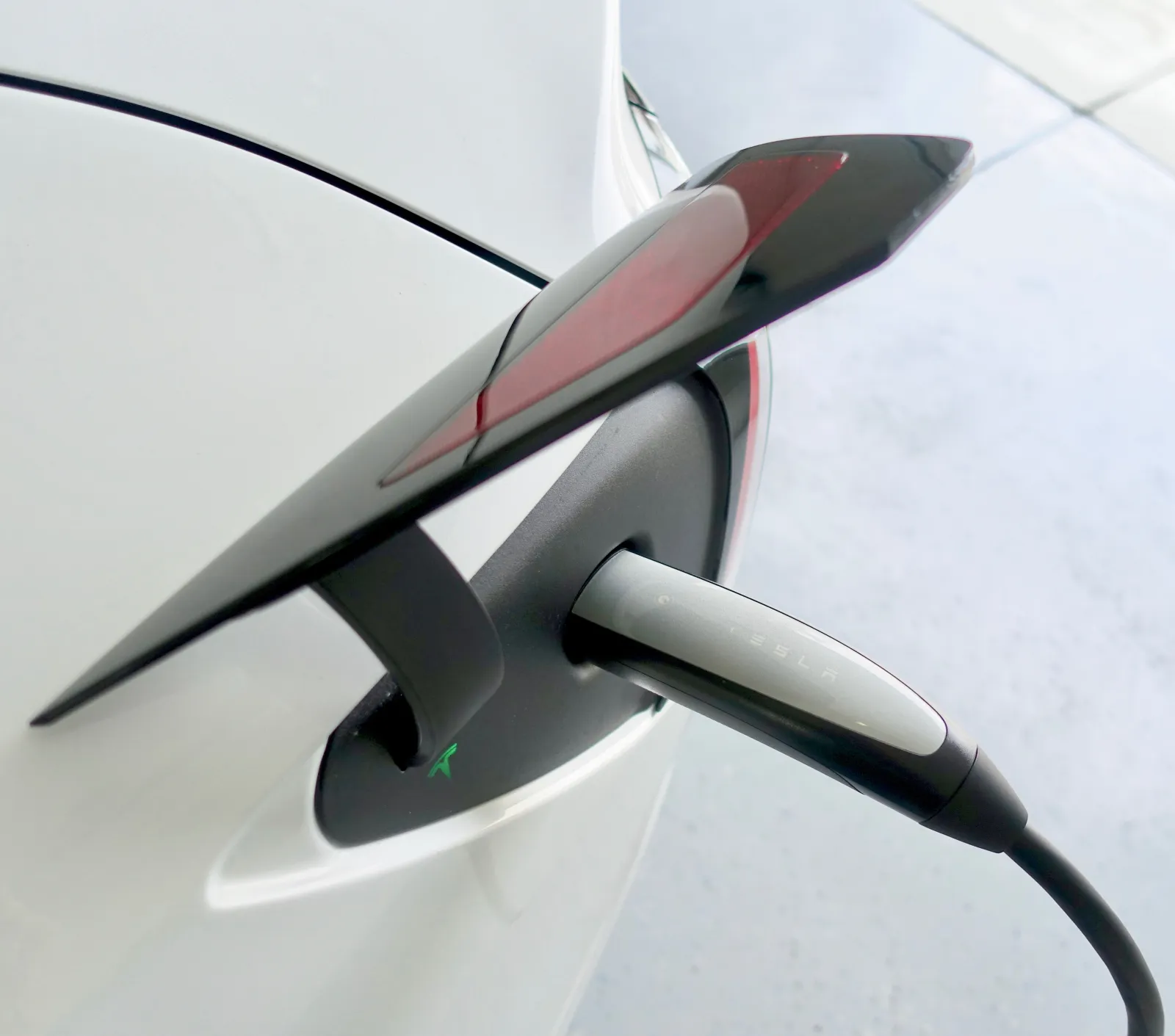
The obvious win is that you stop paying for and losing a $200 lump of plastic. The less obvious one is cable reach. Supercharger cables were sized for a Tesla’s rear-quarter inlet, and an adapter adds a few inches of rigid plastic at exactly the wrong angle, which is how you end up parked diagonally across two stalls at a busy site on a Friday.
The part nobody tells you is that native does not automatically mean faster. Most V3 Superchargers run a 400-volt architecture, and an 800-volt car has to boost that up on board, which caps the rate. Green Car Reports timed a 2025 Ioniq 5 from 10 to 90 percent and got 40 minutes at a 400-volt Supercharger against 30 minutes at an 800-volt Electrify America unit. The adapter route was the quicker one.
Where the newer hardware is in place, the numbers are better. BMW quotes 400 kW for the 2027 iX3 50 xDrive through its standard NACS port, 10 to 80 percent in 21 minutes at an 800-volt station, at $61,500 plus $1,350 destination. Mercedes quotes 320 kW and 202 miles in ten minutes for the $47,250 CLA 250+ with EQ Technology. Neither is cheap, and the incentive side of the sum moved again this year, so read up on what is left of the EV tax credit in 2026 before you sign anything.
Do I still need a NACS adapter in 2026?
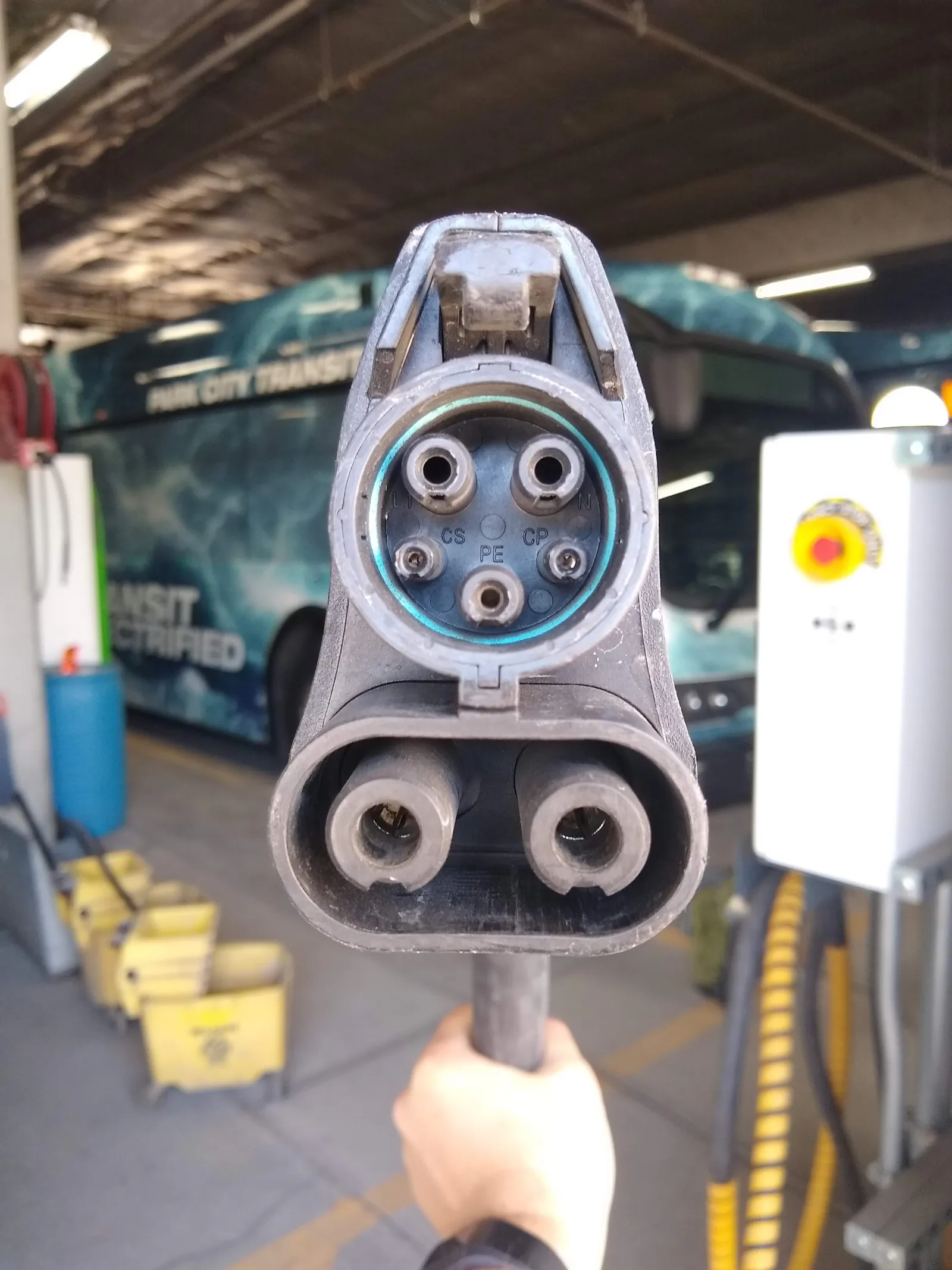
Yes, but usually in the other direction. GM’s own FAQ answers it bluntly: if your GM EV has a native NACS port, you need a NACS-to-CCS adapter. Rivian sells a Combo CCS1 DC adapter for the same reason. Hyundai and Lucid put the CCS1 and J1772 adapters in the box, BMW includes a CCS adapter with the iX3, and Dodge gives you the AC adapter and charges for the DC one.
Level 2 is the bit people forget. Office garages, hotels and street posts are overwhelmingly J1772, so a NACS car needs a small J1772 adapter for the boring overnight stuff. Two cars dodge the problem by fitting two inlets. The 2026 Nissan Leaf has a J1772 socket on the driver’s-side fender for home and Level 2, and a separate NACS socket on the passenger’s side for DC, feeding a 75 kWh pack at up to 150 kW. The Mercedes CLA does the same trick. It looks like indecision and works like common sense, though it does mean remembering which side of the car to point at the post in a dark car park.
Is CCS being phased out?
Not in any hurry. The Joint Office of Energy and Transportation’s connector guidance still requires federally funded chargers to be able to charge a CCS1 vehicle, and permits a J3400 connector only alongside one. SAE published the J3400 recommended practice in 2024 and added J3400/2, covering connectors and inlets up to 1,000 volts, in 2025.
The realistic read is coexistence for about a decade. Millions of CCS1 cars are on the road and their owners vote, so the fat two-pin head stays on the cable racks at Electrify America and EVgo for a long time. What changes is which one comes attached to the new car. From here on the answer is NACS almost everywhere, and the adapter in the frunk is the CCS one.
FAQ
Which EVs can use Tesla Superchargers without an adapter?
Every 2027 Chevrolet, Cadillac and GMC EV, Rivian’s R1T, R1S and R2 from model year 2026, Hyundai’s Ioniq 5, Ioniq 5 N and Ioniq 9, the Kia EV6 and EV9, the 2026 Nissan Leaf, the 2026 Toyota bZ and Subaru Solterra, the Lucid Gravity, the Mercedes CLA with EQ Technology, the 2027 BMW iX3 and the 2027 Dodge Charger Daytona.
Which cars still need an adapter to reach a Supercharger?
Only the ones with a CCS1 inlet. A Ford Mustang Mach-E, F-150 Lightning, E-Transit, Honda Prologue or Acura ZDX needs one, at roughly $200 from Ford and $225 from Honda. If your car already has a NACS port, the adapter you need is the opposite one, NACS-to-CCS, so you can still use Electrify America and EVgo stalls.
What are the GM native NACS 2027 models?
All twelve: Chevrolet Bolt, Blazer EV, Equinox EV and Silverado EV; Cadillac Optiq, Lyriq, Vistiq, Escalade IQ and Escalade IQL; GMC Sierra EV, Hummer EV Pickup and Hummer EV SUV. The Optiq made the switch a year early for 2026, and the Bolt is sold as a 2027 car, so both are already on sale with the NACS inlet fitted.
Does a native NACS port charge faster than an adapter?
Not necessarily. On an 800-volt car the limiting factor is the charger, not the plug. A V3 Supercharger runs at 400 volts, so an Ioniq 5 can be slower there than on a 350 kW CCS stall reached through an adapter. On a 400-volt car, or at a newer high-voltage site, native and adapted speeds are close to identical.
Does cold weather change any of this?
The plug does not care, but the battery does. A cold pack accepts less current whatever connector is fitted, so a January stop takes longer than the brochure figure on both standards. Preconditioning while you drive to the charger is the fix, and it matters more than the port. I’ve covered the numbers in how much range an EV loses in winter.
About this article: every model listed here was checked on 16 September 2026 against the manufacturer’s own material, including GM’s charging status page of 13 August 2026, Nissan’s 2026 Leaf press kit, Rivian’s support article on model year 2026 NACS vehicles, Toyota’s 2026 bZ release, Honda’s adapter announcement and BMW’s iX3 pricing release, plus the Joint Office of Energy and Transportation’s J3400 connector guidance. Claims that are announced rather than on sale, such as Ford’s Fathom pickup, are flagged as such in the text.
2 thoughts on “Which 2027 EVs have a native NACS charging port, listed”