Advertisement
The state of an apple carplay next generation release in 2026 is sharply divided: Aston Martin is the lone manufacturer shipping production cars with the multi-display interface enabled, while Porsche remains committed without a confirmed delivery timeline, and major manufacturers like General Motors and Mercedes-Benz have abandoned the platform entirely. The schism reflects an intense contest over cabin glass, driver relationship management, and digital subscription revenues that legacy automakers refuse to surrender to Cupertino.
The short version
Next-generation Apple CarPlay replaces traditional single-screen projection by controlling digital instrument clusters, HVAC climate readouts, and passenger displays. Aston Martin is currently the only manufacturer delivering the software across production DB12, Vanquish, and DBX models. Porsche has reaffirmed commitment but postponed customer deliveries, while General Motors and Mercedes-Benz walked away to build native software ecosystems.
What makes next-generation CarPlay fundamentally different
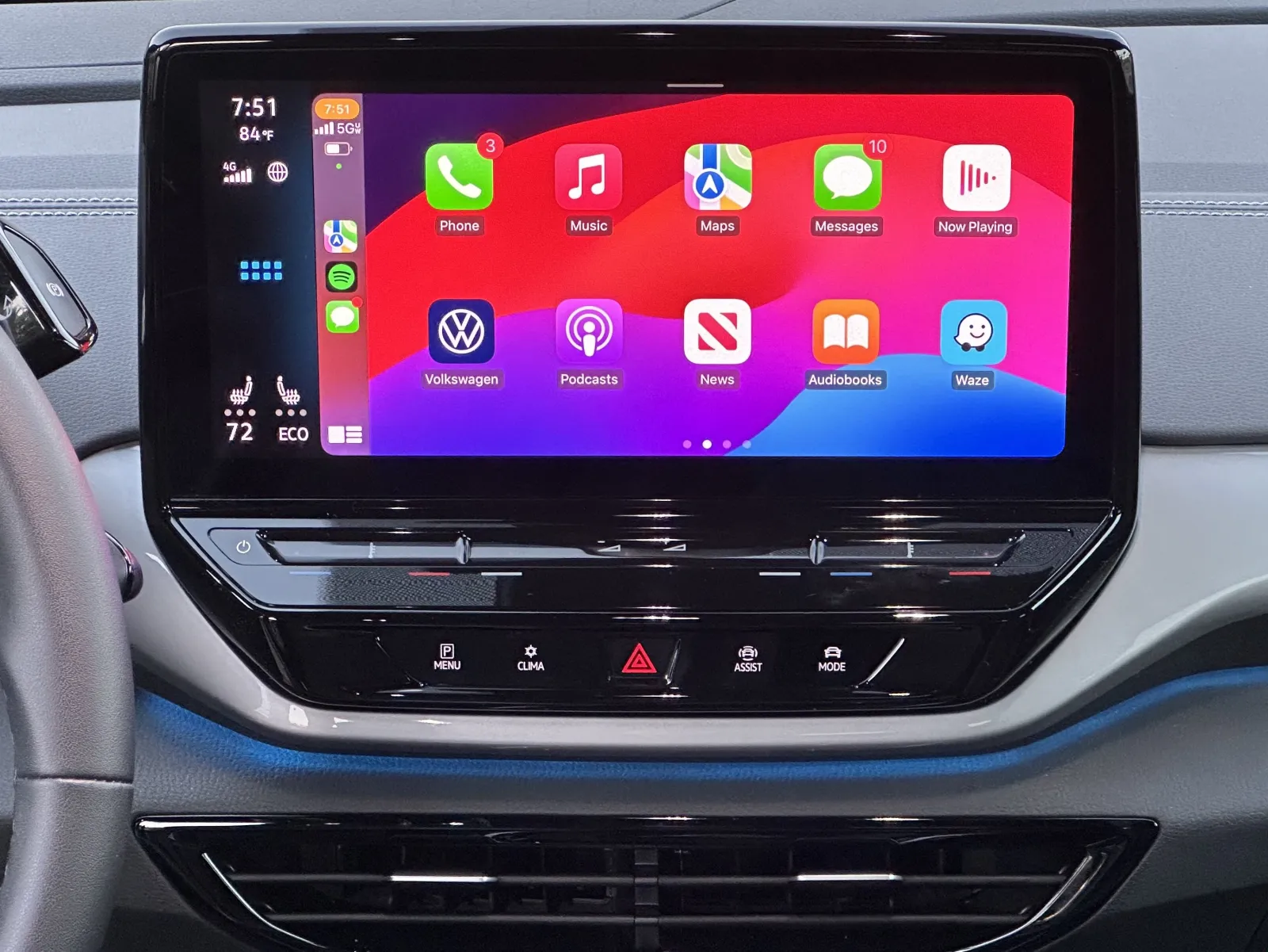
For more than a decade, Apple CarPlay functioned as an isolated window running inside a car center display. Your iPhone handled audio streaming, messaging, and navigation rendering, projecting video output across an H.264 video feed over USB or Wi-Fi. The car primary instrument cluster, speedometer, fuel gauge, and dual-zone climate controls remained isolated inside the vehicle internal Controller Area Network (CAN bus).
The next-generation platform, often colloquially called CarPlay Ultra, erases that boundary. Apple redesigned the software to operate as a distributed vehicle interface. Rather than taking over an isolated rectangular box on the console, the iPhone renders customized graphics across every screen in the dashboard, including the primary digital instrument cluster directly ahead of the driver.
To execute this without violating motor vehicle safety standards, Apple split the processing workload. The iPhone renders media, navigation, and customizable design themes via wireless projection. Meanwhile, safety-critical gauges such as speedometer readouts, tyre pressure warnings, telltale indicators, and braking alerts are rendered locally by automotive microcontrollers using real-time operating systems. If the iPhone disconnects, freezes, or runs out of charge at 70 mph, the instrument cluster speedometer never drops out.
Why Aston Martin embraced the system first
Aston Martin became the launch partner for next-generation CarPlay for pragmatic economic reasons. As an independent low-volume luxury manufacturer, the Gaydon-based firm lacked the multi-billion-dollar annual software budget required to build a proprietary operating system from scratch.
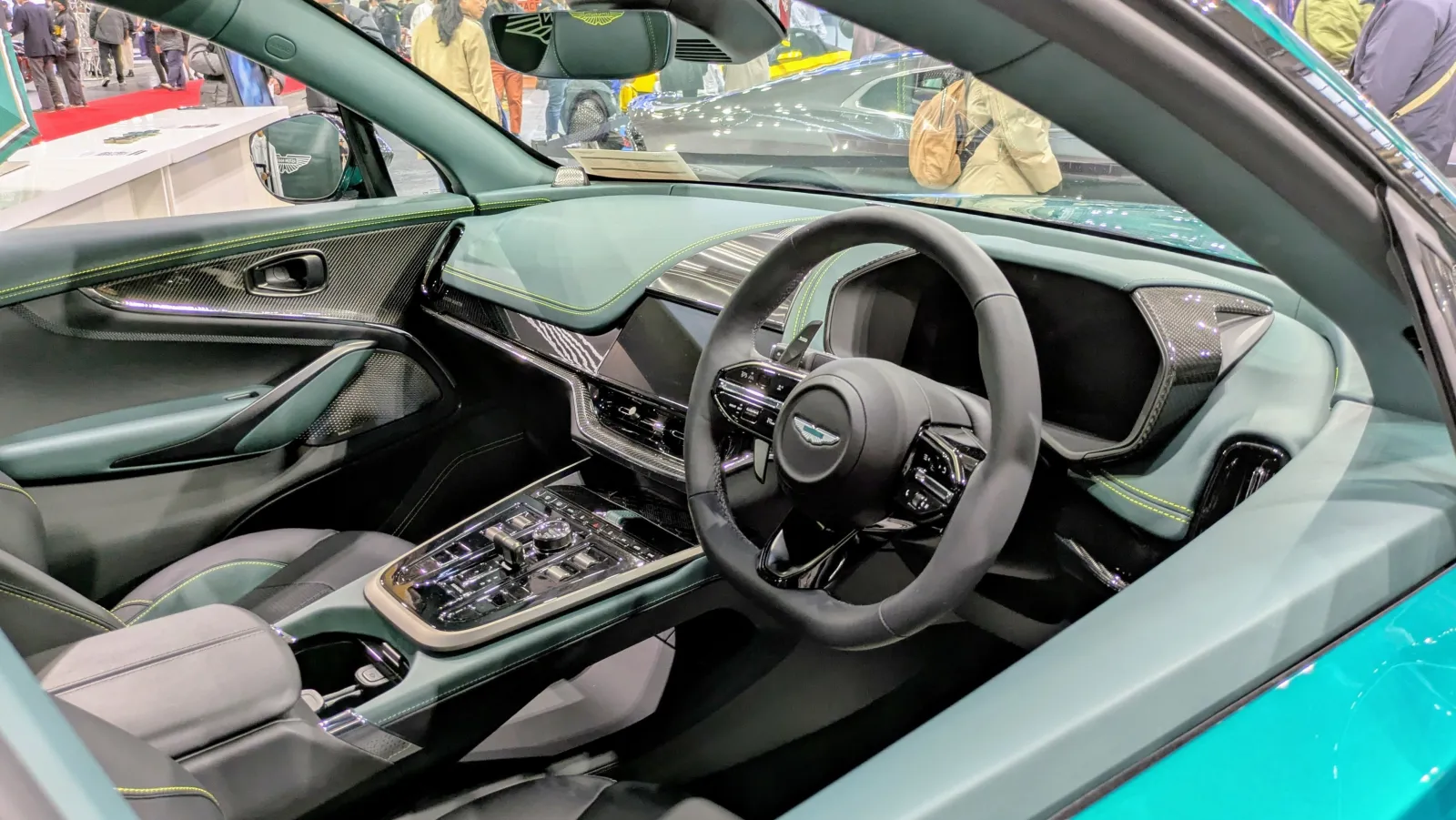
When Aston Martin revealed the DB12 and redesigned DBX, it discarded the ancient Mercedes-sourced COMAND touchpad infotainment that had frustrated buyers for years. Aston Martin developed an in-house Linux-based infotainment core, but deliberately architected its display processors to support Apple multi-screen display protocol. Standard equipment on new orders of the DB12, Vanquish, and DBX includes full instrument cluster rendering, permitting drivers to choose retro chronograph dials or full-width satellite mapping rendered directly through Apple interface.
For high-net-worth customers who spend six figures on a grand tourer, software stability and phone continuity matter more than bespoke proprietary menus. Aston Martin gained a world-class digital cockpit interface without spending hundreds of millions on cloud server backends or standalone app stores, while retaining physical aluminium switchgear for primary mechanical controls.
The Porsche delay and the German pushback
Porsche stood beside Aston Martin during Apple preview announcements, showing concept renderings of Taycan and 911 instrument clusters wrapped in Porsche classic five-gauge layouts rendered by iOS. Yet as of late 2026, no production Porsche has shipped from Zuffenhausen with next-generation CarPlay active.
Official communication from Porsche media channels confirms the company remains committed to launching the technology on future models, but software integration has proven complex. Porsche relies on its sophisticated Porsche Communication Management (PCM) system, built on Android Automotive OS frameworks, to manage high-voltage battery preconditioning, track telemetry, and performance drive mode settings. Blending deep vehicle telemetry with Apple UI guidelines without creating interface lag pushed target delivery schedules backward.
Other German manufacturers adopted open skepticism. Mercedes-Benz CEO Ola Källenius explicitly rejected handing digital instrument displays over to Apple, focusing capital on the proprietary MB.OS architecture. BMW followed suit with its Operating System 9 and Panoramic Vision heads-up displays, maintaining standard wireless CarPlay on the central screen while refusing Apple access to the instrument cluster or heads-up projector.
Automaker positions on next-generation Apple CarPlay
The table below summarizes where key automotive brands stand on implementing next-generation CarPlay across their model lines.
| Automaker | Adoption Status | Display Coverage | Primary Rationale |
|---|---|---|---|
| Aston Martin | Active production on DB12, Vanquish, DBX | Cluster, center screen, passenger display | Outsources UI development cost while offering premium phone integration |
| Porsche | Committed; release pending software validation | Dual-screen cluster and infotainment | Validating deep battery preconditioning and performance telemetry links |
| Hyundai / Kia / Genesis | Announced support; engineering integration underway | Center display and selective cluster widgets | Evaluating consumer demand across luxury lines like Genesis GV90 |
| General Motors | Completely rejected on all new EVs | Zero (all phone projection dropped) | Building Ultifi ecosystem to capture software and charging subscription revenue |
| Mercedes-Benz | Rejected next-gen cluster takeover | Center screen only (standard legacy CarPlay) | Protects proprietary MB.OS brand identity and connected service monetization |
| BMW | Rejected next-gen cluster takeover | Center screen only (standard legacy CarPlay) | Preserves iDrive 9 architecture and proprietary Panoramic Vision head-up tech |
Why General Motors and Mercedes-Benz walked away
The corporate rebellion against next-generation CarPlay centers on revenue and customer relationship ownership. When an automaker installs Apple software across every screen, the vehicle becomes a passive dumb display terminal. Apple controls the visual environment, Siri controls voice interactions, and Apple Maps handles navigation routing.
According to General Motors press statements, dropping phone projection entirely across vehicles like the Chevrolet Blazer EV and Cadillac Lyriq allows GM to integrate charging route navigation directly into battery thermal management. When the native Google built-in system routes to a DC fast charger, it automatically conditions the battery pack temperature. Phone projection apps historically struggled to trigger battery cooling or heating at the precise moment required.
The deeper motivation involves recurring revenue. Automakers project billions in future earnings from over-the-air performance upgrades, in-cabin entertainment bundles, and hands-free driving subscriptions. If drivers operate solely inside an Apple ecosystem, carmakers cannot easily charge monthly subscriptions for proprietary software services. By locking the cabin into their own software stacks, manufacturers retain control of user data, credit card transactions, and brand identity.
What iPhone owners should expect when buying a new car
If you plan to purchase a new vehicle, do not expect next-generation CarPlay to arrive as a sudden mass-market standard. The market has splintered into three distinct camps:
Boutique luxury brands like Aston Martin will offer complete Apple dashboard takeover as a premium convenience feature. Volume manufacturers like Hyundai, Kia, and Genesis are proceeding cautiously, likely introducing hybrid solutions that display Apple Maps inside the instrument cluster while retaining factory climate and drive-mode interfaces, a trend visible on upcoming flagships like the Genesis GV90.
Mainstream brands like Toyota, Ford, and Honda will continue offering standard wireless Apple CarPlay on central touchscreens, giving buyers reliable phone projection without surrendering instrument cluster real estate. Finally, dedicated EV platforms from Tesla, Rivian, and General Motors will remain completely closed to phone mirroring. Cross-shopping these systems requires deciding whether phone continuity outweighs native software integration, as seen when comparing the BMW iX3 50 vs Tesla Model Y.
FAQ
Can older cars receive next-generation CarPlay via an update?
No, older vehicles cannot be upgraded to next-generation CarPlay via a standard software update. The system demands specialized multi-display video controllers, high-speed Ethernet wiring harnesses, and direct hardware communication lines into the vehicle CAN bus. Only cars engineered from the factory with compatible electronic architecture can run the platform.
Does next-generation CarPlay work if my iPhone runs out of battery?
Yes, your car remains completely drivable. Automotive safety regulations prohibit vehicles from relying on a mobile phone for mandatory gauges. Speed, battery state, fuel reserve, turn indicators, and brake warning lights are generated by backup microcontrollers built directly into the car instrument cluster, ensuring full operational safety if the phone dies.
Can I still use basic Apple CarPlay on cars that refuse the next-gen system?
Yes, on most vehicles. Brands like BMW, Mercedes-Benz, Hyundai, and Ford continue supporting standard single-screen wireless Apple CarPlay on their center infotainment touchscreens. General Motors electric vehicles and Tesla models are the primary exceptions that bar phone projection entirely.
Does next-generation CarPlay control car safety systems like ABS or steering?
No, Apple software has no authority over safety-critical vehicle dynamics. Next-generation CarPlay can adjust convenience settings such as air conditioning temperatures, seat heaters, ambient lighting colors, and audio equalizer presets. Braking, stability control, steering calibration, and automated driving systems remain locked behind air-gapped automotive controllers that phone software cannot access.
About this article: automaker commitments, software release dates, and hardware integration requirements were verified on 16 September 2026 against official statements from Apple Inc, Aston Martin Lagonda, Porsche AG, and General Motors investor presentations. Screen projection differences across premium luxury electric vehicles are cross-referenced with our breakdown of the Genesis GV90 and cockpit technology in the BMW iX3 50 vs Tesla Model Y.