
Advertisement
If you have been wondering why 2026 F1 cars lose power on straights, the answer sits in the rulebook rather than in a failing battery. The FIA caps the electric motor at 350 kW, then forces that number down as the car goes faster, reaching zero at 345 km/h. At Monza on 5 September 2026 the quickest speed trap reading in qualifying was 341 km/h, against 354.7 km/h a year earlier. The cars are doing exactly what Article C5.2.8 tells them to do.
F1 2026 energy deployment rules explained
Two articles of the 2026 Formula 1 Regulations Section C (Technical), Issue 20 of 5 August 2026 do most of the work. C5.2.7 sets a hard ceiling: the absolute electrical DC power of the ERS-K may not exceed 350 kW. C5.2.8 then says how much of that you are allowed to put into the road, and it writes the answer as a straight line against car speed.
With Overtake off, the permitted power is 1800 minus five times your speed in km/h. Plug in 290 and you get 350 kW, so below that speed the ceiling is the only thing limiting you. Plug in 320 and you get 200 kW. From 340 km/h the line gets much steeper, 6900 minus twenty times speed, and at 345 km/h there is nothing left. None of this is a team choice. The curve lives in the FIA standard ECU, and the FIA hands every team the circuit-specific version of it no later than four weeks before each race under Sporting Article B7.2.1b.
| Car speed | Max ERS-K power, Overtake off | Max ERS-K power, Overtake on |
|---|---|---|
| 290 km/h | 350 kW | 350 kW |
| 300 km/h | 300 kW | 350 kW |
| 310 km/h | 250 kW | 350 kW |
| 320 km/h | 200 kW | 350 kW |
| 330 km/h | 150 kW | 350 kW |
| 337 km/h | 115 kW | 350 kW |
| 340 km/h | 100 kW | 300 kW |
| 345 km/h | 0 kW | 200 kW |
| 350 km/h | 0 kW | 100 kW |
| 355 km/h | 0 kW | 0 kW |
Figures calculated from the formulae in Article C5.2.8 i and ii, capped by the 350 kW limit in C5.2.7.
The short version
The FIA caps the 2026 electric motor at 350 kW, but only to 290 km/h. Above that the allowed output drops by 5 kW per extra km/h and reaches zero at 345 km/h. Overtake mode holds 350 kW to 337 km/h and cuts out at 355. The usable battery swing is 4 MJ, roughly 11 seconds of full power.
The F1 2026 50-50 power split falls apart on a long straight
Honda’s own 2026 regulations page puts the internal combustion engine at approximately 400 kW (around 540 PS) and the MGU-K at 350 kW (approximately 470 PS), which is where the 50:50 headline comes from. The MGU-H is gone, so the only way to fill the battery now is braking and part-throttle harvesting. That split holds at 200 km/h out of a hairpin. It does not hold at 330 km/h, where the electric side is down to 150 kW and the combustion engine is carrying more than two thirds of the load. Past 345 km/h the split is 100-0.
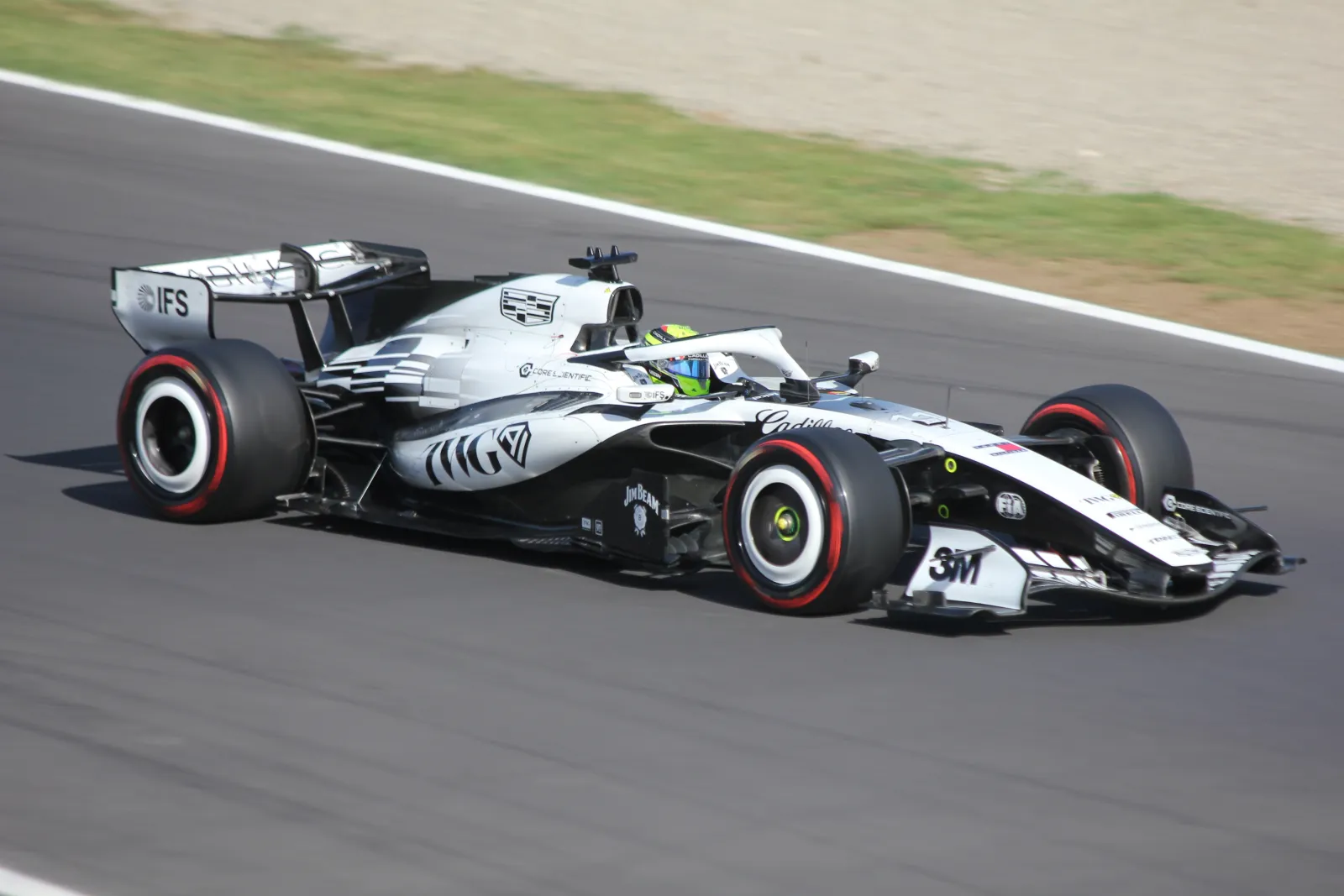
The other number that matters is storage. Article C5.2.9 says the difference between maximum and minimum state of charge may not exceed 4 MJ while the car is on track. Divide 4 MJ by 350 kW and you get 11.4 seconds. A 1.2 km straight taken at an average of 300 km/h takes 14.4 seconds. You can see the problem before anyone opens a telemetry trace.
Why do 2026 F1 cars lose power on straights at Monza but not in Hungary
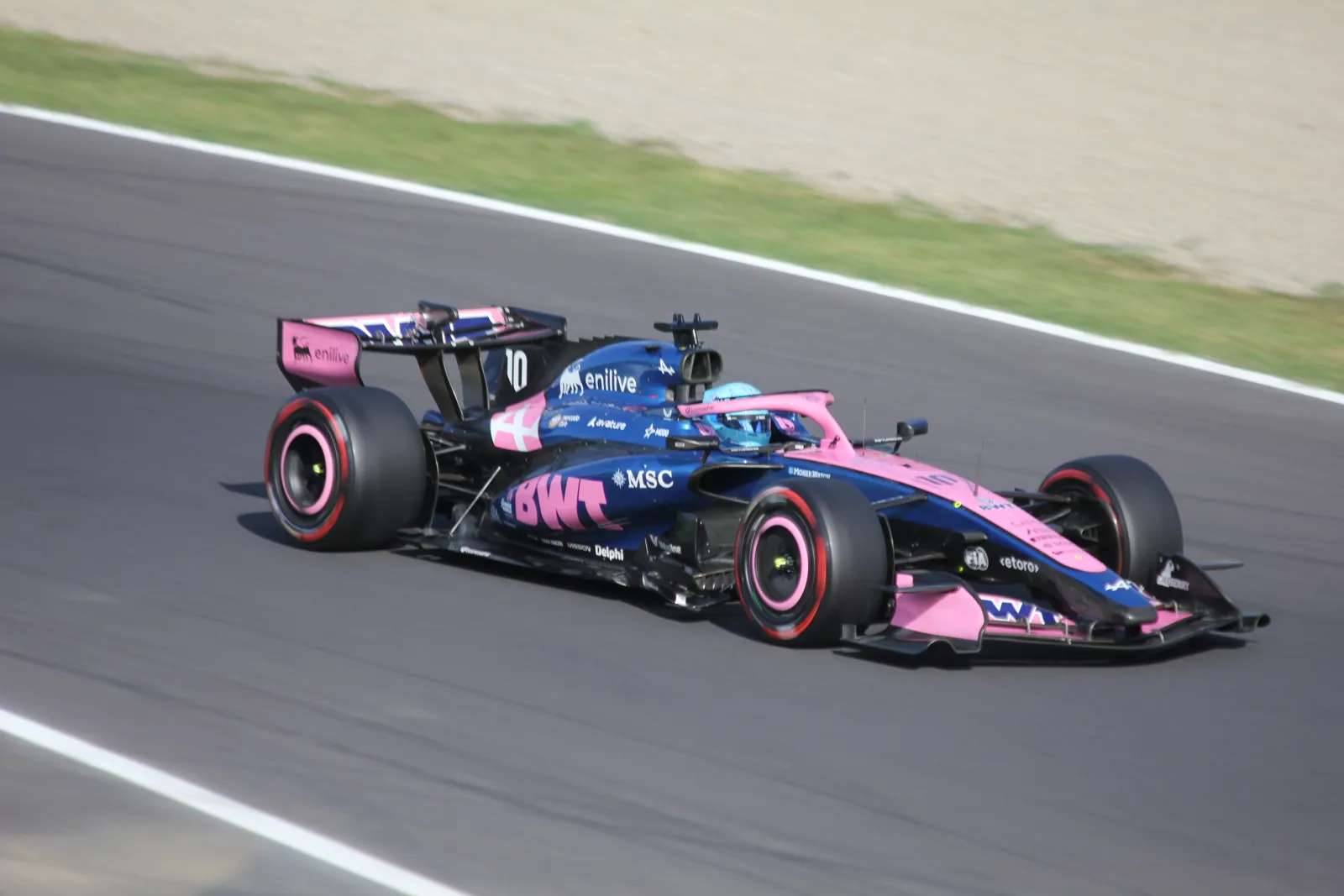
Monza is where the arithmetic gets embarrassing. PlanetF1’s speed trap analysis by Uros Radovanovic, published on 7 September 2026, has the best 2026 qualifying speed at 341 km/h from George Russell, down 13.7 km/h on Nico Hulkenberg’s 354.7 km/h in 2025. Race top speed fell from 365 km/h to 351 km/h. Pierre Gasly’s pole lap of 1:21.786, reported by Formula 1’s qualifying report, was almost three seconds off Max Verstappen’s 1:18.792 from 2025.
Now look at the Hungaroring, where the same analysis found top speeds up by 26 km/h year on year. Short straights, heavy braking into almost every corner, and a car that never gets near the taper. Oscar Piastri said the quiet part out loud at Monza: “In our sim running, I think we were actually quicker on the front straight in Hungary than we were here, which doesn’t make a whole lot of sense, but it’s more we just don’t have the energy to spend.”
The tracks where it will look worst
You can rank the circuits yourself, because the FIA effectively publishes the ranking. Article C5.2.10 sets a baseline recharge limit of 8.5 MJ per lap, allows a cut to 7 MJ where harvesting under braking is genuinely limited, and allows a further cut for qualifying to no less than 4 MJ where the harvesting needed to reach the higher figure would be excessive. Jon Noble published the full circuit list for The Race on 2 May 2026. The low numbers are the energy-starved tracks:
- Italy (Monza): 5 MJ, the lowest on the calendar
- Canada, Austria, Las Vegas: 6 MJ
- Brazil: 6.5 MJ
- Barcelona, Abu Dhabi: 7 MJ
- Monaco, Hungary, Singapore: 9 MJ, no harvesting problem at all
Baku is the one that will surprise people. Mercedes’ own race page calls the run out of the final corner to Turn 1 the longest full-throttle section of the entire year, 200 m longer than La Source to Les Combes at Spa, and the 2.2 km figure gets quoted every year. But Azerbaijan sits at 8.5 MJ, the full allowance, because the castle section and the 90-degree lefts before it hand the cars plenty of braking energy. Long straight, easy recharge. When the cars reach Neftchilar Avenue for the Azerbaijan Grand Prix on Saturday 26 September, expect the fade to show up in the last 300 m rather than halfway down.
Lift and coast, superclip and the qualifying recharge cap
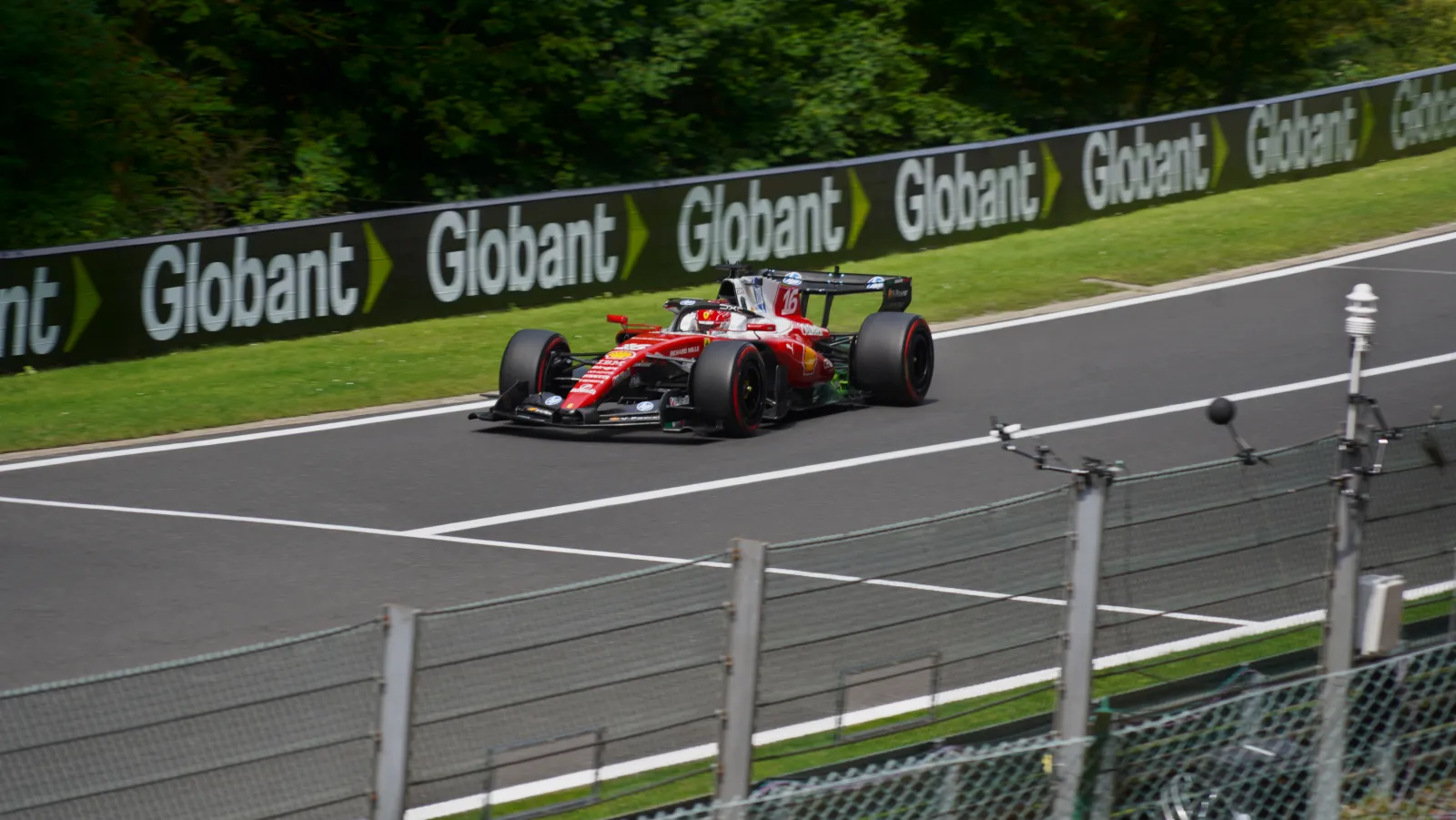
There is a second reason the cars look slow at the top end, and it has nothing to do with the deployment curve. To fill 4 MJ of battery you need braking events, and Monza gives you barely a handful of them. Teams got round that in testing with what Raceteq calls superclip: the car diverts up to 350 kW from the engine into the battery while the driver is still flat on the throttle, so the car slows without the driver lifting and the active aero stays in its low-drag setting. That is the behaviour that makes a car appear to sag near the end of a straight.
The FIA has been trimming it all season. From the Miami Grand Prix on 3 May 2026 the governing body raised the superclip power to 350 kW and tightened the qualifying recharge thresholds, with the stated aim of holding superclip to roughly two to four seconds a lap and keeping drivers flat rather than coasting. The August rewrite went further, dropping the qualifying floor from 5 MJ to 4 MJ. Sporting Article B7.2.1c caps the whole exercise at twelve events per season, of which no more than four may sit below 5 MJ.
One more detail explains why the power fades instead of snapping off. Article C5.12.6 says the driver maximum power demand may not be reduced faster than 50 kW in any one second at circuits where the FIA calculates the power-limited distance exceeds 3,500 m, or 100 kW per second everywhere else. Monza gets the slow version. That is a deliberate choice to make the drop driveable, and it is also why the cars visibly bleed speed over several car lengths rather than hitting a wall.
Drivers have adapted faster than the paddock expected. George Russell, defending the lead at Monza before his tyres went away, said he “knew exactly what I needed to do with the energy management to defend”. Kimi Antonelli still made 25 overtakes on his way from 19th on the grid to the win. If you want the other half of the picture, the aero side is covered in our piece on how 2026 active aero switches between straight and corner modes, and the extra 0.5 MJ a chasing driver gets is explained in the guide to Overtake mode, the old manual override.
FAQ
What is the F1 2026 MGU-K power output?
350 kW, or about 470 hp. Article C5.2.7 of the FIA technical regulations sets that as an absolute ceiling for the ERS-K. In practice you only see the full figure below 290 km/h with Overtake off, or below 337 km/h with Overtake active. Above those speeds the permitted output falls on a fixed line written into the standard ECU.
Why do 2026 F1 cars lift and coast?
To fill the battery. The 2026 cars have no MGU-H, so every joule comes from braking or part throttle, and a lap of Monza gives you very little of either. Lifting early creates a longer harvesting window. The FIA prefers teams to use superclip instead, which harvests at full throttle, and has been adjusting the qualifying recharge caps all season to remove the reward for coasting.
At what speed does the electric power cut out completely?
345 km/h in normal running and 355 km/h with Overtake active, under Article C5.2.8. The taper starts earlier than that. Normal deployment begins falling the moment you pass 290 km/h, losing 5 kW for every additional km/h, so a car sitting at 330 km/h already has only 150 kW of the 350 kW available.
Are the 2026 cars slower than the 2025 cars everywhere?
No. The pattern tracks straight length. Monza qualifying was about three seconds slower than 2025 and its top speed fell 13.7 km/h, while PlanetF1’s data shows the Hungaroring gained 26 km/h at the trap. Tracks with short straights and frequent braking suit the 2026 rules. Power circuits with long flat-out runs are where the cars give time back.
About this article: checked on 16 September 2026 against the FIA 2026 Formula 1 Regulations Section C (Technical) Issue 20 and Section B (Sporting) Issue 08, both dated 5 August 2026, Honda’s official 2026 regulations commentary, Formula 1’s Italian Grand Prix qualifying report, Jon Noble’s circuit-by-circuit recharge table for The Race, Raceteq’s energy system explainer and PlanetF1’s Monza speed trap analysis. Power and energy figures are calculated from the regulation text rather than from team estimates.