Advertisement
Manual Override Mode is the extra battery deployment a Formula 1 car is allowed when it is running close behind another car. The short answer to what is manual override mode in F1 2026 is that it is a power unit rule wearing an overtaking rule’s clothes. The FIA raises the electrical power ceiling for the chasing car at high speed, hands it a little more energy to harvest, and lets the driver choose where on the lap to spend it. The rulebook now just calls it Overtake. Broadcasters call it Overtake Mode.
The short version
Overtake gives a chasing driver a higher battery power limit, not a movable wing. Get within one second at the detection line and the car behind can deploy up to 350 kW past 290 km/h, where a car without it is already tapering off. It also harvests up to 0.5 MJ more energy that lap.
What is manual override mode in F1 2026, exactly?
Article B7.2 of the 2026 Formula 1 Sporting Regulations (Section B, Issue 08, dated 5 August 2026) sets it out in flat, unexciting language. Every circuit gets a Detection Line, an Activation Line and a value called the Detection Gap, all three published to the teams at least four weeks before the event. Cross the Detection Line inside that gap behind another car and Overtake switches on for you at the Activation Line. Fall outside the gap at the next Detection Line and it switches off.
The gap has been one second all season. It is not written into the rules as one second, though. The FIA sets the number event by event, which means it can be tightened at a circuit where passing is too easy without anyone reopening the regulations. The Detection Line is marked by a solid yellow line painted across the track with signage on at least one side, so you can actually see the trigger point on a trackside camera shot if you know what you are looking at.
Once it is armed, the driver gets two things. Up to 0.5 MJ of extra recharge on that lap, under Article C5.2.10iii. And a completely different power ceiling.
The numbers, straight from the technical regulations
The 2026 ERS-K is capped at 350 kW. Article C5.2.8 of the 2026 Technical Regulations then limits how much of that you may use as a function of car speed, with two different formulas. Without Overtake, the allowance is 1800 minus five times your speed in km/h, hitting zero at 345 km/h. With Overtake, it is 7100 minus twenty times your speed, and it does not hit zero until 355 km/h. Run both curves and the shape of the rule stops being abstract.
| Car speed | Power without Overtake | Power with Overtake | Advantage |
|---|---|---|---|
| 250 km/h | 350 kW | 350 kW | 0 kW |
| 290 km/h | 350 kW | 350 kW | 0 kW |
| 300 km/h | 300 kW | 350 kW | 50 kW |
| 320 km/h | 200 kW | 350 kW | 150 kW |
| 337 km/h | 115 kW | 350 kW | 235 kW |
| 340 km/h | 100 kW | 300 kW | 200 kW |
| 345 km/h | 0 kW | 200 kW | 200 kW |
| 350 km/h | 0 kW | 100 kW | 100 kW |
| 355 km/h | 0 kW | 0 kW | 0 kW |
Below 290 km/h, Overtake is worth precisely nothing. Both cars already have the full 350 kW. The gap only opens above that, peaks at about 235 kW near 337 km/h, and sits around 200 kW through the 340s while the defending car has literally zero electrical power left. That single fact explains most of what you have watched this season.
How the F1 overtake button works in 2026
There is no override button. This confuses people, because F1’s 2026 terminology does include a Boost button and commentators use the two words interchangeably.
The split is clean once you see it. Boost is the driver’s own control, a switch on the wheel that dumps stored energy whenever and wherever they want, attacking or defending. Overtake is not a control at all. The standard ECU arms it when the proximity condition is met and disarms it when it is not, and the driver simply finds a higher ceiling waiting the next time they ask for everything. McLaren’s own guide to the new terminology describes Overtake as automatic and the Boost button as the thing the driver presses.
So the practical sequence is this. A driver comes out of the last corner knowing from the dash that the tool is live, then decides how to burn it. One long pull all the way down the straight, or a short jab on corner exit to close up before the braking zone and take the inside line instead.
Did F1 replace DRS with manual override?
Yes in the rulebook, no in the way most people mean it. DRS ran its last race at the end of 2025 and does not appear in the 2026 regulations. Overtake took its slot as the proximity aid. But the moving wings did not disappear, they changed job.
Every 2026 car runs active aero with two positions, officially named Straight Mode and Corner Mode. In Straight Mode the front and rear flaps open to shed drag. In Corner Mode they close and the car gets its downforce back. The part that separates it from DRS is that it is not a reward for being close to anyone. Everybody gets it, in the designated zones, all race long. Formula1.com’s own beginner’s guide to the 2026 rules puts it plainly: now everybody can do it, all of the time. If you want the wing side of the story in detail, our piece on how active aero works on the 2026 cars covers the zones and the switching logic.
Why the passes it creates do not feel like DRS passes
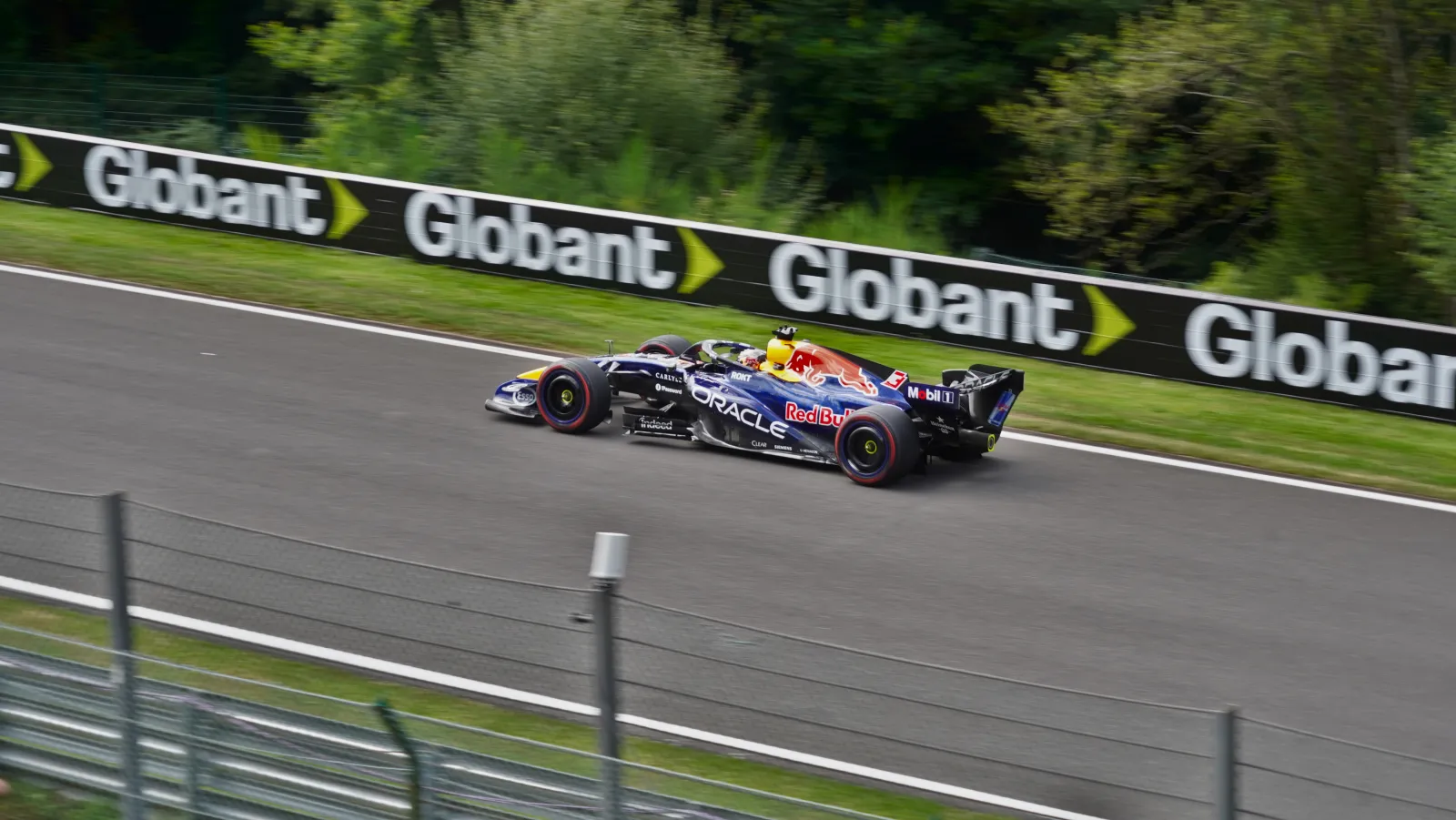
Overtaking counts are up, sharply, and they swing wildly from race to race. Counting on-track passes after lap one, MotorBiscuit’s 2026 tally has the season averaging 61 per grand prix, with China at 101, Miami at 88, Japan at 85 and Monza at 78. Motor Sport Magazine’s Pablo Elizalde ran a different count in April and got a 279 percent rise in Japan over 2025, 106 passes against 28.
Then came Madrid on 13 September 2026, the first grand prix at the Madring. Four on-track overtakes after lap one. Liam Lawson squeezing past Franco Colapinto was one of them. Verstappen, who finished second, told Formula1.com afterwards that “it’s a circuit that’s very difficult to pass on; if you position yourself in the middle, there isn’t really a way through”. A track with no long, fast straight gives Overtake nothing to work with, because the advantage only exists above 290 km/h.
Monza was the opposite problem. Verstappen finished third there on 6 September and said Red Bull simply could not match the energy deployment of the Mercedes-powered cars, that Overtake was “too powerful for us to defend, even on new tyres”, and that people drove past him like he was a turtle. Fernando Alonso, quoted by RaceFans four days later, said he made two or three unwanted overtakes at Monza. Passes you did not choose to make are a strange thing to celebrate.
What the pit wall actually spends the race managing
Because Overtake is an energy rule, the interesting work happens long before the car gets within a second of anyone. Half the 2026 car’s power is electrical, and it has to be recovered somewhere. On a circuit where drivers are at full throttle for roughly 80 percent of the lap, there is almost nowhere to put the harvesting except into the throttle itself, which is where super clipping comes from: the MGU-K takes torque back while the driver is still flat, and the car visibly slows well before the braking board.
For the Italian Grand Prix the FIA cut the harvest ceiling to five megajoules a lap, the tightest of the season, specifically to stop that happening everywhere. Oscar Piastri explained the trade to Autosport on 3 September 2026: “If the harvest limit was higher, we would be super clipping everywhere and probably losing 30 or 40km/h at the end of each straight.” Monza’s peak speeds without a tow ended up among the lowest seen there in three decades. We go deeper into the deployment maps in our look at how the 2026 cars spend their battery on a straight.
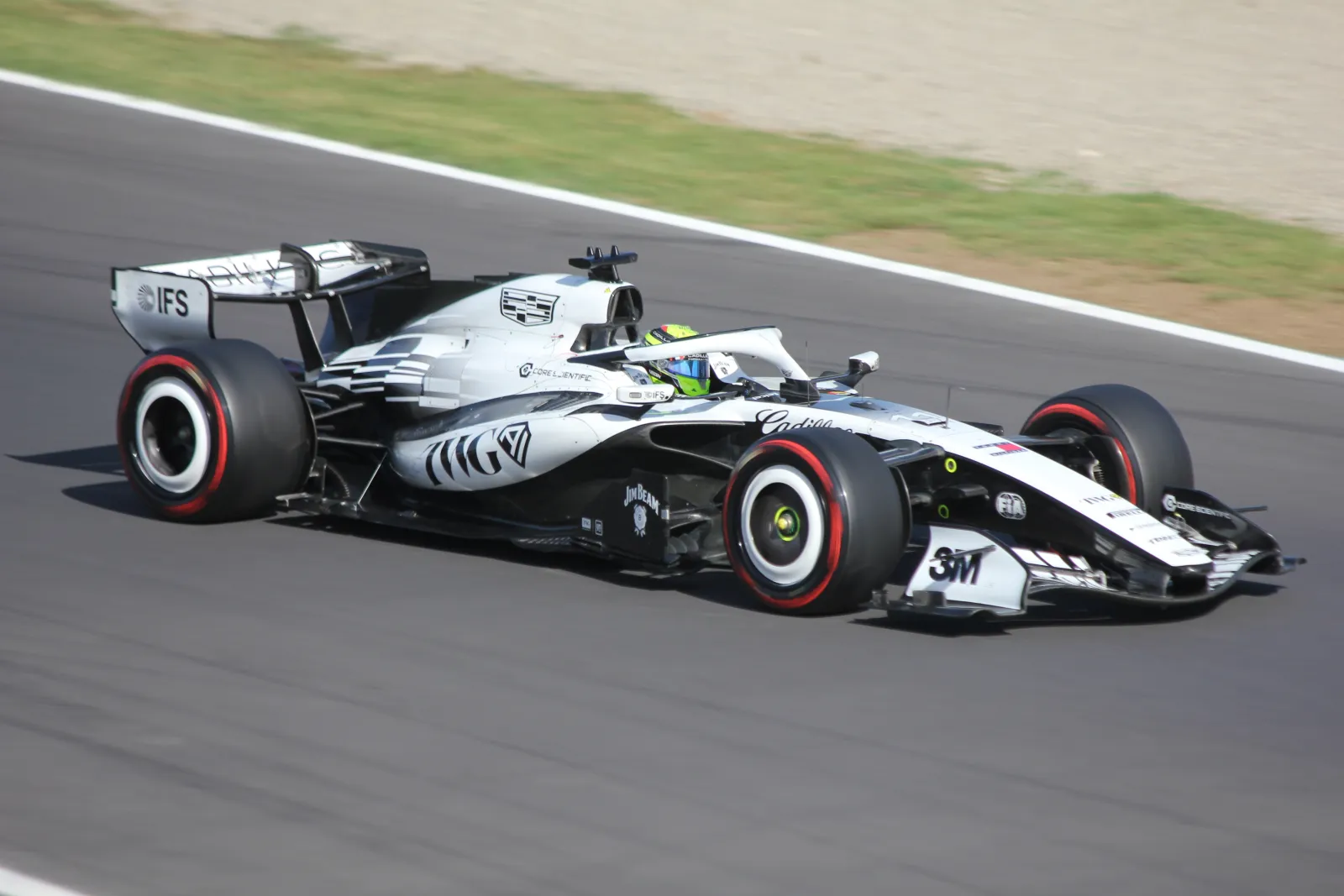
For a new team the energy side has been the steepest part of the climb, and it shows up in race trim more than in qualifying. We scored that separately in our verdict on Cadillac’s first season in F1.
FAQ
How long does manual override last in F1?
There is no timer. Under Article B7.2.3, Overtake switches on at the Activation Line and stays on until you cross the Detection Line more than the detection gap behind someone, so in practice it lasts a full lap. What limits you is energy, not seconds. The extra 0.5 MJ and the higher ceiling only pay above 290 km/h, which on most tracks means a few seconds per straight.
Manual override vs DRS, which is better?
DRS was more predictable and more artificial: open the flap in the zone, gain roughly the same amount every lap, complete the pass. Overtake depends on your top speed, your engine and how much energy you banked, so the same one second gap is worth a lot at Monza and nothing at Madrid. It rewards the better power unit rather than the closer car.
Can a driver use Overtake to defend?
Not against the car in front of them. Overtake only arms when you are inside the detection gap behind another car, so a leader has no access to it. A defending driver’s counter is Boost, the manually deployed stored energy that can be used anywhere at any time, plus lifting early to bank charge. Verstappen’s complaint at Monza was that this was not enough.
Does Overtake Mode work in qualifying?
It does, and differently. Article B7.2.3b says that in lap time classified sessions, meaning practice and qualifying, Overtake is enabled and activated at all times with no proximity condition at all. Everybody has it on every lap. It only becomes a proximity reward in races and sprints. The FIA also disables it entirely in low grip conditions, so a wet grand prix has no Overtake.
About this article: all figures were checked on 16 September 2026 against the FIA 2026 Formula 1 Sporting Regulations (Section B, Issue 08, 5 August 2026, Article B7.2) and Technical Regulations (Section C, Issue 20, 5 August 2026, Articles C5.2.7 to C5.2.10), Formula1.com’s guide to the 2026 rules and its race day team quotes from Madrid, McLaren’s 2026 terminology explainer, Autosport’s 3 September 2026 Monza energy analysis, Motor Sport Magazine and MotorBiscuit’s overtaking counts, and reported quotes from Verstappen and Alonso. The power table is calculated from the published regulation formulas rather than quoted from a press release.