
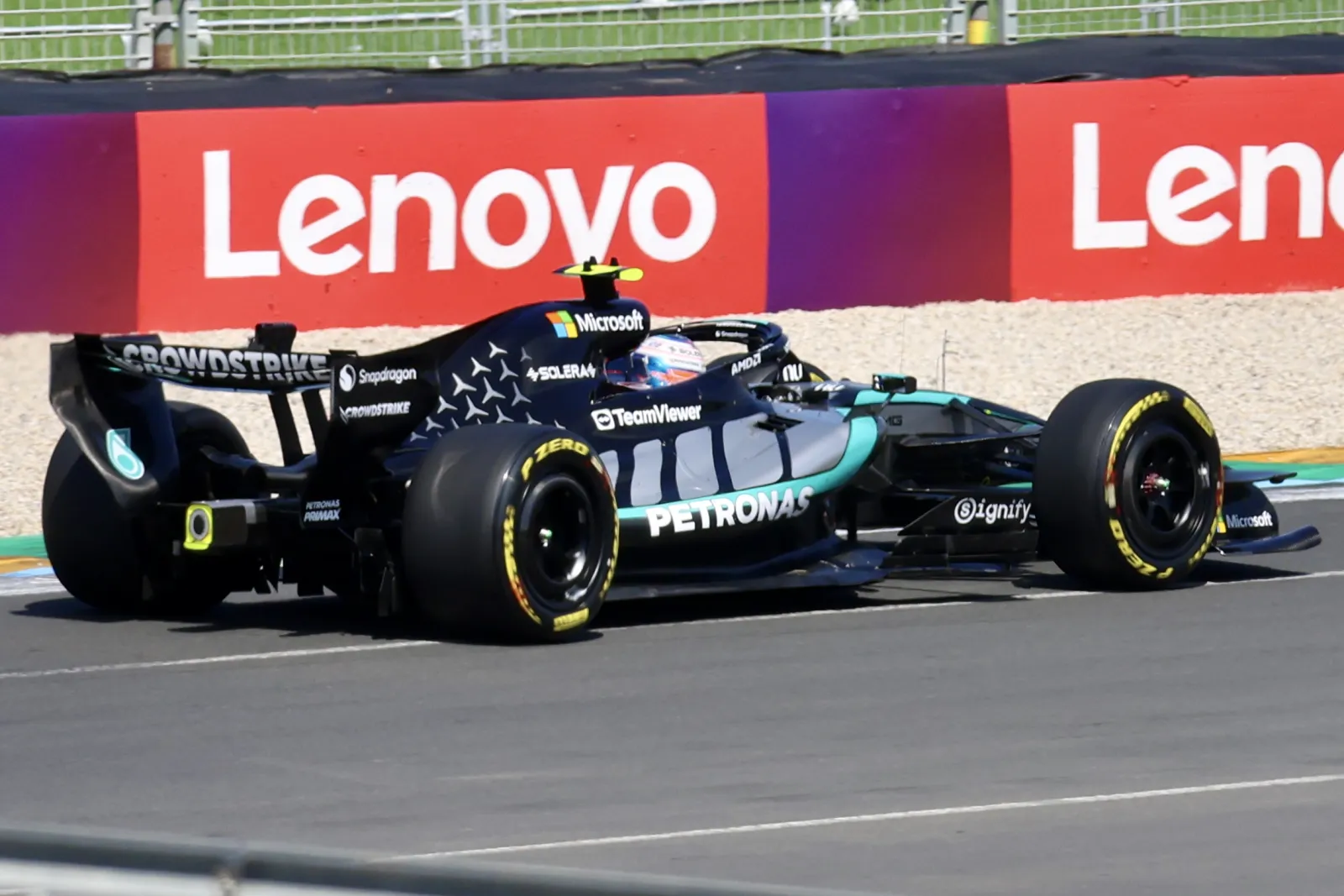
Advertisement
F1 2026 active aero works with two fixed wing positions and nothing in between. Corner Mode is the default: flaps closed, full downforce, the way a Formula 1 car has always looked through a turn. Straight Mode rotates flaps on both the front and the rear wing flat to shed drag, and it exists only inside zones the FIA marks out on each circuit. That is how F1 2026 active aero works, and unlike DRS, every car gets it on every lap.
The short version
Every 2026 F1 car has moving flaps on the front and rear wings. Corner Mode, the default, keeps them closed for downforce. Straight Mode opens them inside marked zones and cuts drag by about 55 percent. The driver presses a button to open the wings; braking or lifting off shuts them again. DRS no longer exists.
What is X-mode and Z-mode in F1, and what happened to those names?
They are the same two modes wearing older labels. X-mode was the low-drag setting for straights, Z-mode the high-downforce setting for corners, shorthand taken from the axes aerodynamicists work in: X for drag, Z for vertical load. Both names went in December 2025. Williams sets the swap out in its own 2026 glossary, listing Straight Mode as the replacement for Straight-Line Mode or X Mode, and Corner Mode as the replacement for Cornering Mode or Z Mode.
F1 said it wanted to avoid gimmicks and jargon, and tested the new words on fan focus groups before signing them off. If an engineer still says X-mode on team radio, they mean Straight Mode. The hardware did not change with the name.
How does F1 2026 active aero work on the car?
Both wings carry flaps that move, the front one as well as the rear. In Corner Mode they sit at full angle. In Straight Mode they lie flat, and the FIA’s own explainer on the 2026 rules puts the saving at roughly 55 percent less drag for about 30 percent less downforce. That is a bigger swing than DRS ever gave, because two wings are moving instead of one.
The regulations pin the two positions down hard. The move between them has to finish inside 400 milliseconds, the change in flap angle has to be identical every time so nobody can trim it for a single lap, and if the system fails the flaps must spring back to Corner Mode. Downforce is the safe state. A broken wing in 2026 leaves a car slow down the straights rather than loose under braking, which is the right way round.
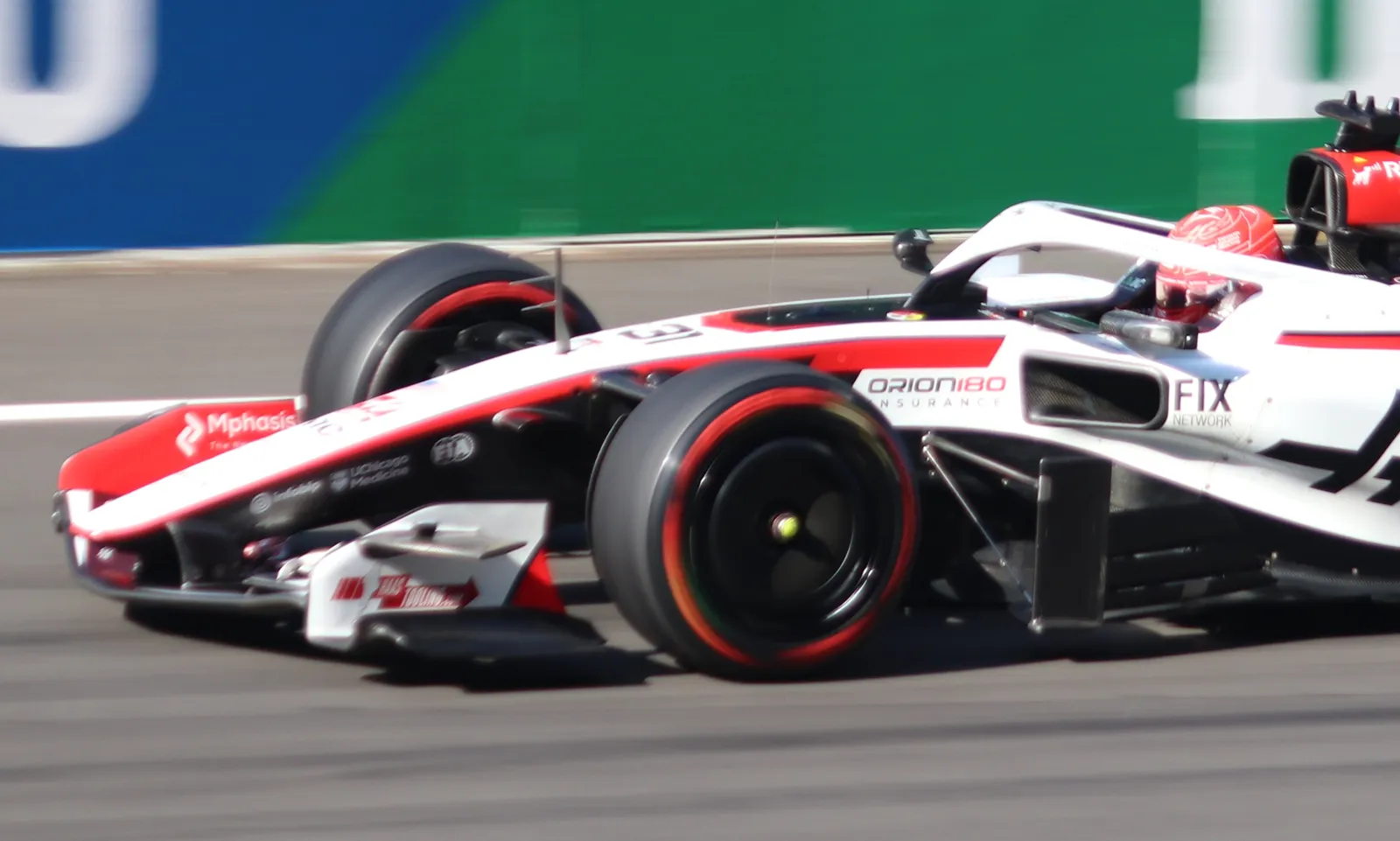
There is a third setting most viewers will never spot. Partial activation puts the front wing in Straight Mode while the rear stays in Corner Mode, and race control can drop a zone from full to partial when the track is damp. The Race explained the reasoning: teams trimming for near-zero drag found that a damp surface plus a fast kink halfway down a straight could pitch the car into understeer at 300 km/h.
Do drivers control the 2026 F1 wings?
Yes, and the control is a plain button on the steering wheel. Press it inside an activation zone and both wings flatten together. Trackside boards mark where each zone begins, and the FIA has to publish the zones at least four weeks before a race weekend.
Closing is mostly done for the driver. Touch the brake, lift the throttle, or run past the end of the zone, and the flaps snap back to Corner Mode on their own. A driver can also shut them early, which matters when the corner arrives sooner than the simulator promised. What has gone is the one-second rule. There is no gap requirement at all, so a driver running alone in ninth uses Straight Mode exactly as often as the leader does.
The extra workload is real. Kimi Antonelli, who led the championship into September after winning at Monza from 19th on the grid, told Motorsport.com in pre-season that it requires a bit more management but is all doable. Liam Lawson read it as an opening: there is a lot more drivers can do to make a difference. FIA single-seater director Nikolas Tombazis said the governing body held tools in reserve in case the cockpit load proved too much for some.
F1 straight mode and corner mode explained on a real 2026 lap
The zone count changes at every circuit, and that is where the system stops being a press release and starts shaping races. As of 16 September 2026 the pattern is clear enough: fast tracks get four or five zones, tight ones get one or two, and Monaco gets none.
| 2026 circuit | Straight Mode zones | The detail that matters |
|---|---|---|
| Albert Park, Melbourne | 5 | No Straight Mode from the grid until after Turn 1 |
| Spa-Francorchamps | 5 | Includes La Source to the foot of Eau Rouge, shut through Raidillon |
| Silverstone | 4 | Hamilton Straight, Wellington, Luffield to Woodcote, Hangar Straight |
| Monza | 4 | Overtake detection sits just before Parabolica |
| Madring, Madrid | 2 | Nothing at all in sectors two and three |
| Monaco | 0 | Corner Mode for the entire weekend |
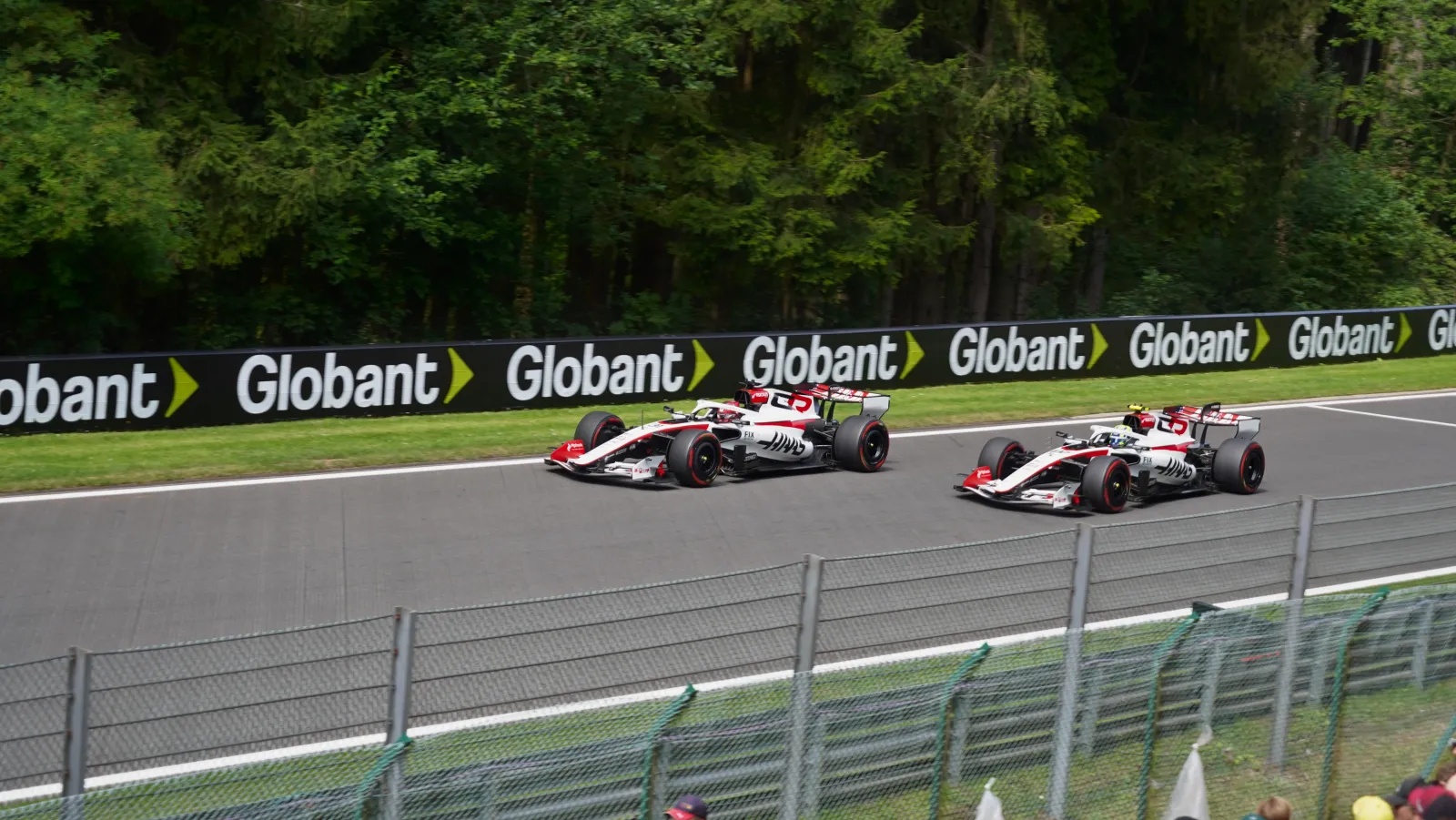
Spa is the clearest case. The FIA allowed five zones for the Belgian Grand Prix, including the run from La Source down to the foot of Eau Rouge, the first time a moveable wing has been permitted on that stretch since DRS was restricted there in 2013. Through Eau Rouge and Raidillon themselves the wings stay closed. Then the Kemmel Straight, then Stavelot to Blanchimont, then Blanchimont to the Bus Stop.
Fernando Alonso put the consequence bluntly before that race: if you deploy at Spa from Turn 1 to 5, finito for the rest of the lap, then there is a one-minute second sector with no deployment at all. Wings and battery are one problem, solved together. Lower drag means the same 350 kW of electrical power carries the car further, which is why the way a team spends its battery on the straights now decides as much as wing level does.
Madrid went the other way. For the Madring’s championship debut on 13 September the FIA allowed two zones, the main straight and the pull out of Turn 3, with nothing in sectors two and three. Turn 12, La Monumental, a 500-metre right-hander banked at 13.5 degrees, is taken in full downforce and full drag. Monza got four, with the Overtake detection point sitting just before Parabolica and the activation on the exit.
Monaco got zero. F1’s own explainer says each Straight Mode zone has to last more than three seconds, a threshold meant to stop drivers flicking the wings open for a gain too small to measure. Nothing in Monte Carlo clears it, so the cars ran the whole weekend locked in Corner Mode, with a special engine map that started tapering electrical power from 200 km/h instead of the usual 290 km/h.
Is DRS gone in 2026 F1?
Gone, and not coming back in this rule cycle. Active aero cannot do DRS’s old job of handing the chasing car a free run, because everyone has it everywhere. So the overtaking aid moved from the wings to the power unit.
The replacement is Overtake, known as Manual Override Mode while the regulations were being drafted. Get within one second of the car ahead at a detection point and on the following lap you receive an extra 0.5 MJ plus full 350 kW all the way to 337 km/h, while the car in front sees its own deployment taper away from 290 km/h. That band between 290 and 337 km/h is the overtaking window, and it is entirely electrical. Overtake has its own set of rules worth reading properly.
Drivers also carry a Boost button that decides where the full electrical output lands, anywhere on the lap. Watching the Monza onboards, I found the wing movement almost impossible to see at first. The giveaway is the trailing edge of the rear flap dropping a fraction as the car straightens out of Curva Grande, half a second before the speed trace climbs hard.
FAQ
Do the 2026 F1 wings move on their own?
Opening is manual. The driver presses a button on the steering wheel inside a marked activation zone and both wings flatten together. Closing is largely automatic: braking, lifting off the throttle or reaching the end of the zone returns the flaps to Corner Mode without any input. A driver can also close them early if a corner arrives sooner than planned.
Can a driver use Straight Mode to defend a position?
Yes, and that is the biggest break from DRS. Straight Mode carries no proximity requirement, so a leading car opens its wings in exactly the same places as the car chasing it. Neither driver gains an aerodynamic edge from it. The only proximity-based aid in 2026 is Overtake, which adds electrical power rather than removing drag.
What happens if the active aero fails?
The 2026 technical regulations require the flaps to return to Corner Mode when the system stops working, so a failure leaves a car with full downforce and full drag. It will lose time down every straight and burn more battery reaching the same speed. What it will not do is arrive at a braking zone with the rear wing stuck flat and no grip.
Why is there no active aero at the Monaco Grand Prix?
Every Straight Mode zone has to last longer than three seconds, a rule written to stop pointless button presses that add workload without saving meaningful time or fuel. No stretch of Monte Carlo clears that bar, so the FIA set zero zones and the field ran the whole weekend in Corner Mode. Overtake still worked, with detection between Turns 16 and 17.
About this article: written and fact-checked on 16 September 2026 against the FIA’s 2026 rules explainer, Formula1.com’s Monaco active aero article, the Williams and McLaren 2026 terminology glossaries, Motorsport.com’s piece on driver workload, and the FIA zone announcements for the Belgian, Italian and Spanish Grands Prix. Zone counts are set race by race, so check the race director’s notes for the weekend you are watching.