
Advertisement
The rollout of google gemini android automotive officially replaces the classic Google Assistant with an on-device and cloud-hybrid language model designed to handle conversational queries and direct vehicle control. Beginning with over-the-air software updates across eligible Volvo, Polestar, and Renault models, the shift allows drivers to speak naturally without memorizing rigid command syntax, linking contextual navigation, cabin temperature adjustments, and charging preconditioning into single requests.
The short version
Google has started deploying Gemini to replace Google Assistant in vehicles running Android Automotive OS with Google built-in. Rolled out via over-the-air updates to Volvo, Polestar, and Renault models, Gemini handles conversational language, chains multi-step commands, summarizes incoming messages, and coordinates route planning with DC fast charger battery preconditioning.
The difference between Android Auto and Android Automotive OS
To understand why this update matters, you must separate Android Auto from Android Automotive OS. The names sound identical, but they run on completely different hardware layers.
Android Auto is a phone-projection system. Your smartphone runs the apps, executes voice requests, and projects a video feed over a cable or wireless link onto a dumb display screen in the car. It has zero access to vehicle sensors, speedometers, cabin climate hardware, or battery temperature controllers.
Android Automotive OS (AAOS) is a full operating system embedded directly into the vehicle electronic architecture. Pioneered by Volvo and Polestar and later adopted by Renault, General Motors, and Porsche, AAOS runs directly on the car dashboard processors. When equipped with Google Automotive Services (branded commercially as “Google built-in”), the operating system has native communication access to vehicle CAN-bus modules, battery management systems, door actuators, and dual-zone HVAC controllers.
That deep integration is why Gemini integration on AAOS functions differently from a smartphone assistant. Rather than merely reading web search snippets aloud, Gemini operates as an interactive digital flight engineer for the vehicle.
What Gemini can do that Google Assistant never could
The original Google Assistant required rigid, programmatic grammar. If a driver said, “I am feeling cold, navigate to a coffee shop with high-power charging along my route, and tell my passenger we are running ten minutes late,” the legacy system would stumble on the compound request or pick an arbitrary single command to execute.
Gemini replaces keyword pattern matching with an intent-based reasoning model. Drivers can speak conversational paragraphs. Gemini breaks the sentence into distinct sub-tasks, parses vehicle sensor data, and triggers multiple system actions simultaneously.
First, it interprets cabin comfort context. Saying “my hands are freezing” prompts Gemini to engage the heated steering wheel and driver seat heater without requiring explicit device commands. Second, it coordinates electric vehicle route planning with battery thermal conditioning. When routing to a DC fast charging hub, Gemini confirms station stall availability via live cloud APIs, calculates your state of charge on arrival, and instructs the vehicle Battery Management System to pre-heat the traction pack fifteen minutes before arrival, maximizing charging speeds.
Which vehicle models get the Gemini update
The migration from Google Assistant to Gemini rolling out across 2026 targets vehicles featuring Google built-in hardware, according to Google developer documentation and manufacturer service schedules.
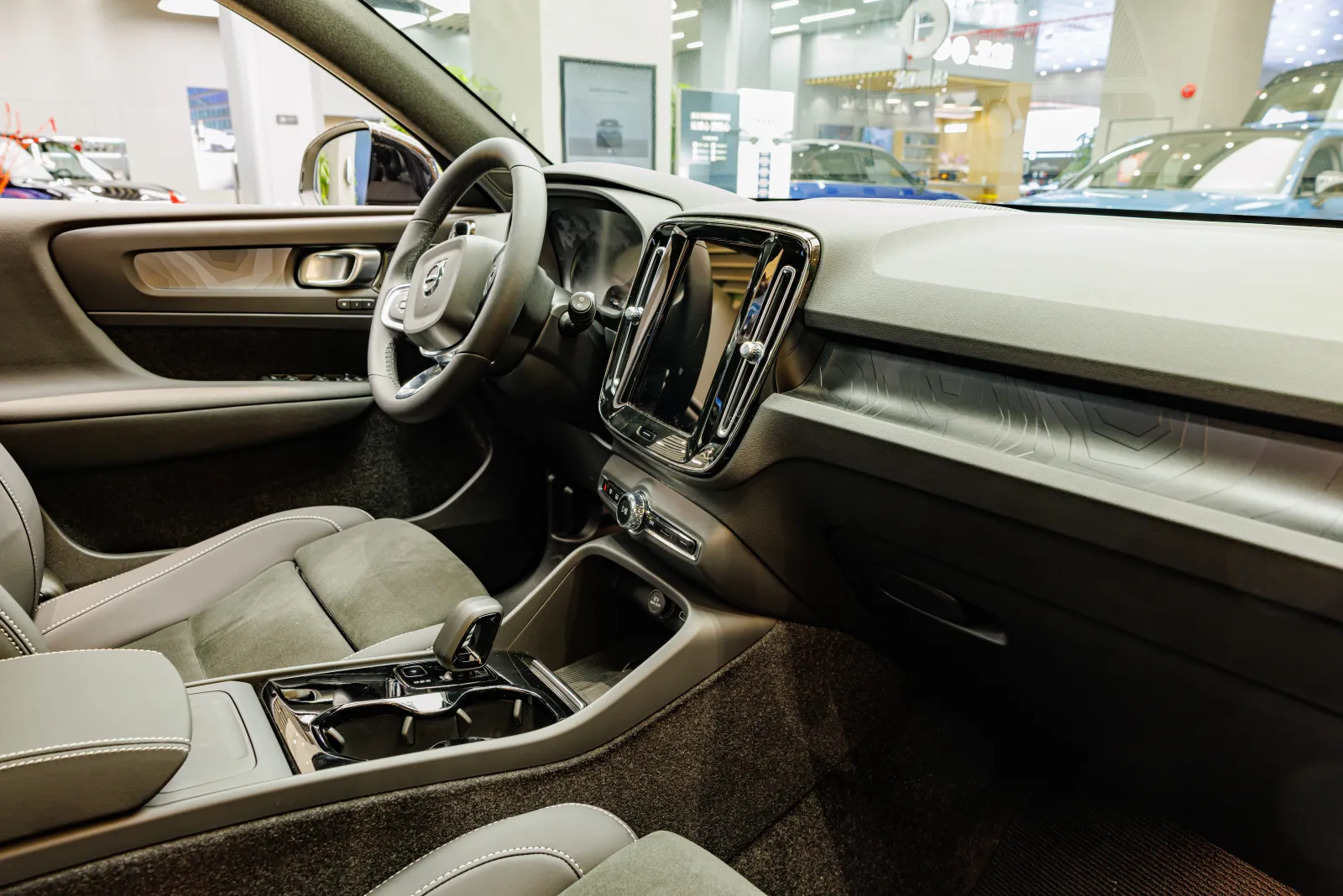
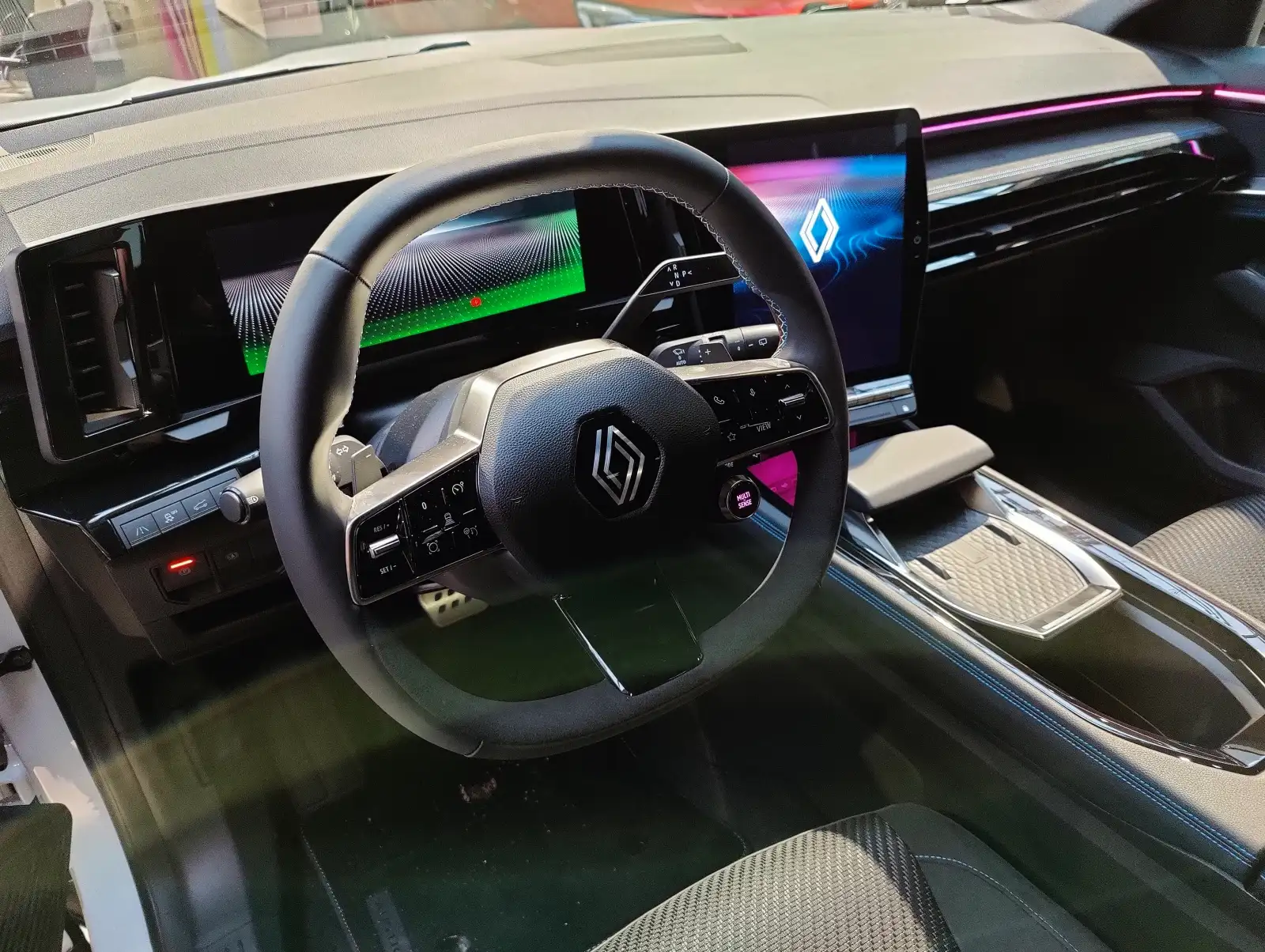
Volvo initiated rollout across its entire Google built-in catalog manufactured since model year 2020. This fleet covers the pure electric EX40, EC40, EX30, and EX90, alongside mild-hybrid and plug-in hybrid variants of the XC40, XC60, XC90, S60, and V60. Polestar delivered the update to Polestar 2, Polestar 3, and Polestar 4 fastbacks. In Europe, Renault deployed Gemini across its OpenR link fleet, including the Megane E-Tech, Scenic E-Tech, Austral, and Rafale.
Because the update is delivered over the air, owners receive an installation notification on their central touchscreen while parked. The vehicle downloads the software package using its embedded 4G/5G telematics e-SIM, requiring approximately fifteen to twenty minutes of parked downtime to flash system partitions.
Comparison: Google Assistant vs Google Gemini in car cockpits
The table below highlights the functional differences between legacy Google Assistant and the new Gemini integration inside Android Automotive.
| Feature Area | Legacy Google Assistant | Google Gemini (2026 AAOS) |
|---|---|---|
| Query Understanding | Rigid grammar; requires specific syntax phrases | Conversational natural language; understands implied intent |
| Multi-Step Tasks | Fails on compound commands; handles one task per prompt | Chains multiple vehicle adjustments and navigation steps in one sentence |
| EV Battery Thermal Integration | Basic destination waypoint without active thermal triggers | Coordinates route arrival SOC with automatic pack preconditioning |
| Messaging & Communications | Reads individual SMS texts word-for-word | Summarizes long group chat threads and drafts contextual replies |
| Vehicle Manual Knowledge | Generic web search answers or “I don’t understand” | Indexes vehicle digital owner manual; explains dashboard warning symbols |
| Hardware Execution | Pure cloud processing; sluggish in low-signal areas | Hybrid architecture with lightweight on-device models for cabin controls |
Hardware limitations, chipsets, and subscription requirements
While the update reaches millions of existing vehicles, hardware differences dictate performance speed. Early Android Automotive models from 2020 through 2022 relied on Intel Atom A3900 processors. These older chipsets lack dedicated neural processing units (NPUs). On Intel-based vehicles, Gemini offloads almost all language processing to Google cloud infrastructure, causing a perceptible one-to-two-second latency pause before the assistant responds.
Newer vehicles, such as the Polestar 3, Volvo EX90, and Renault Scenic E-Tech, run on Qualcomm Snapdragon Cockpit platforms (including the Snapdragon 8155 and third-generation Digital Cockpit chips). These processors feature onboard neural hardware, enabling a small quantized model to run locally on the dashboard computer. Basic cabin adjustments, window controls, and local media playback execute instantaneously without needing an active internet connection.
Car buyers must also factor in connectivity costs. Automakers bundle complimentary Google built-in cellular data packages for four to five years from the initial purchase date. Once that trial expires, maintaining cloud-based Gemini features, real-time Google Maps satellite traffic, and Spotify streaming requires an active connected vehicle data subscription, typically costing $10 to $15 monthly. Cross-shopping these long-term technology fees is as essential as comparing vehicle efficiency on models like the 2027 Toyota bZ or looking at standard equipment on the 2027 Chevrolet Bolt.
Privacy, data transmission, and offline functionality
Placing a generative language model inside a car cabin naturally raises driver privacy concerns. A car microphone array is active whenever the vehicle operates, listening for wake words like “Hey Google”.
According to technical disclosures from Volvo Cars technical portals, audio streams are not recorded continuously. Cabin microphones buffer audio in temporary memory, overwriting data every few seconds until the acoustic model detects the authorized wake phrase or the driver presses the physical steering wheel voice button. Once triggered, the voice prompt is encrypted and routed either to the on-board processor or Google cloud data centers.
Drivers retain granular software toggles inside the central settings display. You can disable voice history storage, turn off personalized calendar suggestions, or disable microphone listening entirely. If you disconnect the vehicle data connection, Gemini operates in offline mode, restricting its skills to physical vehicle adjustments like climate controls, demisters, and local radio tuning.
FAQ
Will Gemini work if my car loses cellular signal?
Yes, but with reduced capabilities. On vehicles equipped with modern Qualcomm Snapdragon processors, lightweight on-device models process core physical vehicle commands, including adjusting temperature, turning on heated seats, and controlling cabin lights. However, complex web searches, live traffic rerouting, and conversational reasoning require an active cellular connection.
Do I need a paid Google One AI subscription to use Gemini in my car?
No, you do not need a personal Google One AI Premium subscription to use standard Gemini features inside your car. Automakers license the Google built-in software stack directly. As long as your vehicle active connected data plan remains active, Gemini voice control and system integrations operate without personal subscription fees.
Can Gemini adjust vehicle settings like drive modes or regen braking?
Yes, Gemini has API access to selected vehicle dynamics settings, depending on the manufacturer. On Volvo and Polestar models, you can ask Gemini to switch between one-pedal driving modes, toggle creep mode, or adjust steering firmness. However, safety-critical parameters such as stability control deactivation remain locked behind physical center-screen confirmation prompts.
Is Gemini coming to phone-projected Android Auto?
Google has begun integrating Gemini-powered message summarization and smart replies into Android Auto for mobile phones. However, because Android Auto is merely a projected video stream from your smartphone, it cannot access internal vehicle systems, meaning it cannot adjust cabin air conditioning, check tyre pressures, or precondition the EV traction battery.
About this article: software deployment timelines, supported vehicle lists, and natural language capabilities were verified on 16 September 2026 against official Google built-in developer documentation, Volvo Cars global updates, and Polestar technical bulletins. Drivetrain and infotainment contrasts across modern electric crossovers are cross-referenced with our guide on the 2027 Toyota bZ and the 2027 Chevrolet Bolt.