
Advertisement
Can you negotiate the destination fee on a new car? No. The manufacturer sets that number, federal law makes the manufacturer print it on the window sticker before the car is ever loaded onto a truck, and the dealer takes delivery with the figure already on the glass. Everything printed below it is a different story, and in 2026 that is where the money hides.
The short version
The destination charge is a manufacturer fee disclosed on the Monroney window sticker under federal law, so a dealer cannot delete it. Documentation fees, dealer prep, advertising charges, market adjustments and add-on packages are set by the store, not the factory. Those are the numbers worth fighting over, and several states cap the first one.
Why the destination charge is the one line a dealer cannot erase
The window sticker has a legal name. It is the Monroney label, after the Oklahoma senator who sponsored the Automobile Information Disclosure Act of 1958. The statute, 15 U.S.C. 1232, says every manufacturer of new automobiles shall, “prior to the delivery of any new automobile to any dealer… securely affix to the windshield, or side window of such automobile a label.” Among the items that label must carry is “the amount charged, if any, to such dealer for the transportation of such automobile to the location at which it is delivered to such dealer.”
Read the wording again, because it does all the work. The manufacturer affixes the label. The manufacturer prints the transportation number. By the time a salesperson walks you across the lot, a dealer has no more authority to edit that line than to edit the VIN two inches above it.
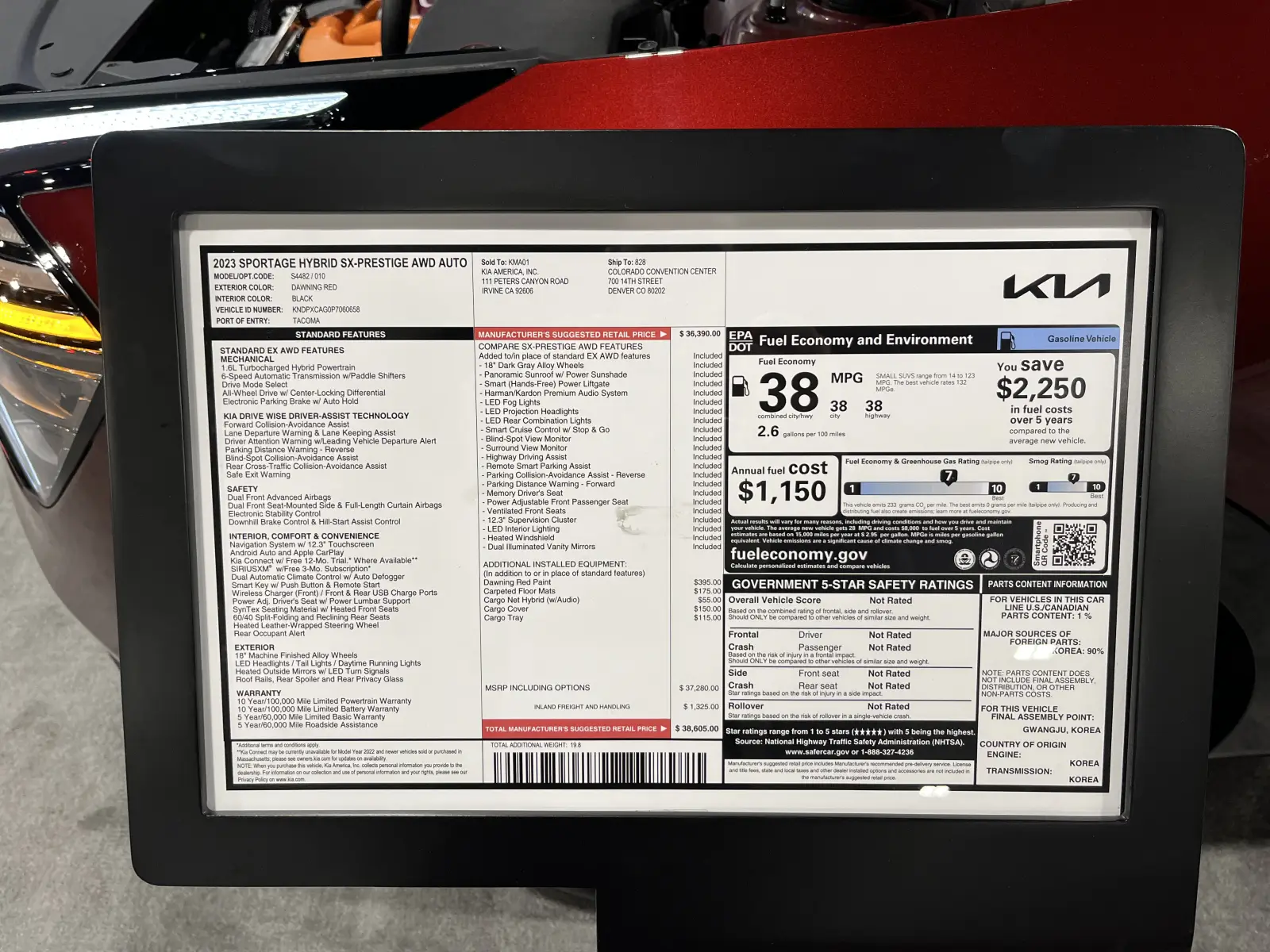
Here is one in the wild. On a Kia Sportage Hybrid SX-Prestige sticker, the MSRP reads $36,390, options push it to $37,280, then a line marked “inland freight and handling” adds $1,325.00, and the total lands at $38,605. Same font, same box, no asterisk. The small print also says MSRP “includes Manufacturer’s recommended pre-delivery service,” a sentence worth memorising for later.
One honest caveat. Federal law requires the charge to be disclosed, not paid. A dealer cannot strike the line, but a dealer can sell you the car for less than the total at the bottom of the sticker. Aim at the selling price and ignore the line item. The out-the-door figure is the only score that counts.
How much is a destination fee in 2026?
More than you paid last time. Kelley Blue Book’s March 2026 survey put the 2025 industry average at $1,551, against $1,135 in 2019 and $961 in 2015. Cars.com reported on 6 March 2026 that domestic brands now average close to $2,200 on this line alone, and that the typical size of each increase jumped 22% in the first quarter of 2026, from $119 to $144.
| 2026 model | Destination charge | Note |
|---|---|---|
| Alfa Romeo Stelvio, Tonale | $3,250 | Highest we found |
| Cadillac Escalade IQL | $2,895 | |
| Ford F-150, Chevrolet Silverado 1500, GMC Sierra 1500 | $2,795 | Up $200 |
| Jeep Grand Wagoneer | $2,795 | |
| Ram 1500 | $2,595 | |
| Chevrolet Colorado | $2,095 | Up $400 for 2026 |
| Most other GM and Jeep models | $1,995 | |
| Subaru Trailseeker, Uncharted | $1,450 | |
| BMW range | $1,350 to $1,550 | |
| Mazda range | $1,235 to $1,530 | |
| Toyota Camry | $1,195 | Higher in ten southern states |
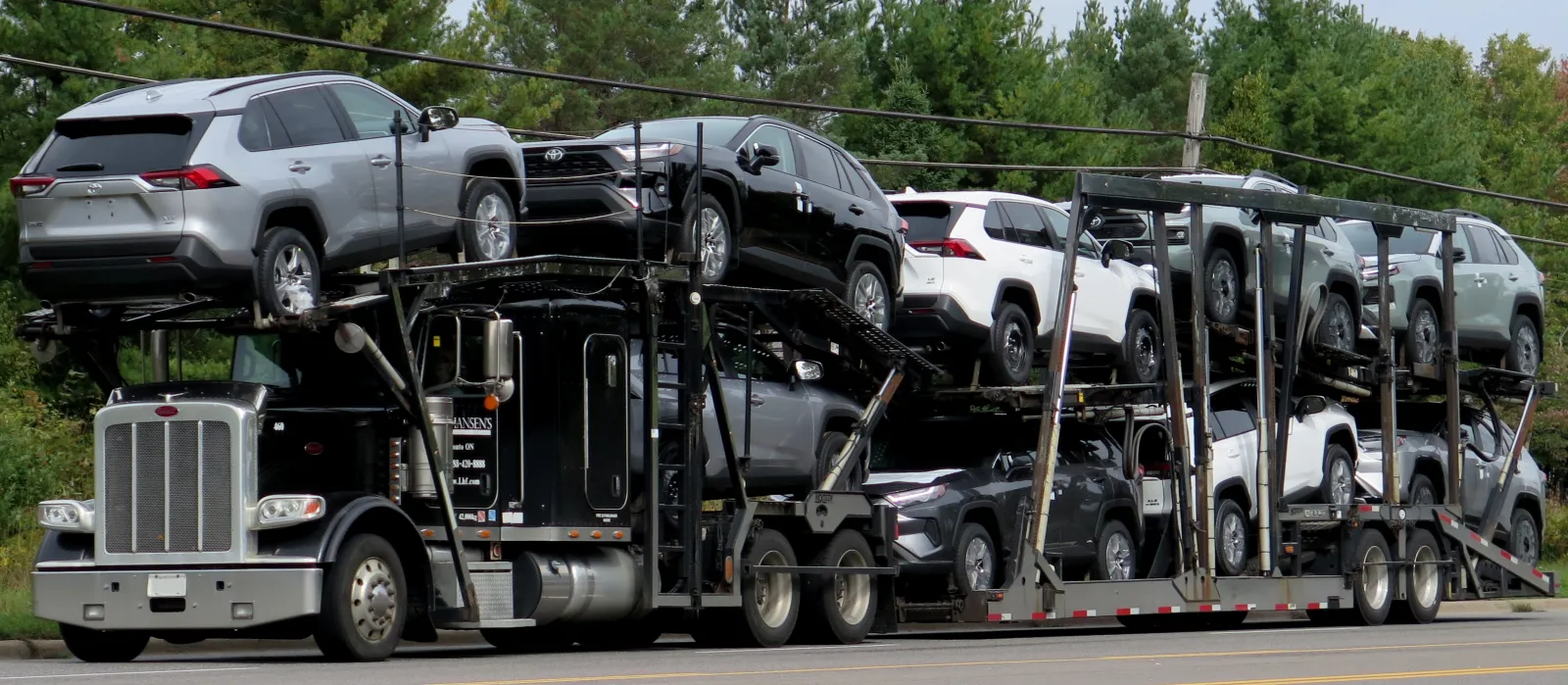
Two quirks are worth knowing. The charge does not vary with distance, because makers average the cost nationally. And Toyota’s own disclaimer says the delivery, processing and handling fee is higher in Alabama, Arkansas, Florida, Georgia, Louisiana, Mississippi, North Carolina, Oklahoma, South Carolina and Texas. Those ten states belong to two independent distributors, Southeast Toyota and Gulf States Toyota, which buy the cars and resell them to dealers. Same badge, different freight line.
Why did destination charges go up?
Tariffs, mostly, and the fact that this line draws less attention than MSRP. Kelley Blue Book’s reporting says automakers use the destination fee as a pricing lever precisely because raising it does not move the headline number shoppers compare across brands. GM trucks went from $1,995 in April 2025 to $2,795 for 2026, a 40% jump in under a year. CarBuzz made the awkward point in December 2025 that diesel was down more than 25% from its 2022 peak while these fees climbed.
The same tariff arithmetic runs through the rest of the deal, which I have laid out in our guide to buying now versus waiting under 2026 tariffs. It also pushes shoppers sideways into the late 2026 used market, where no destination line exists at all.
What is the difference between destination and dealer fees?
Origin. The destination charge comes from the factory, appears on a federally formatted label, and is identical for every buyer of that model in that region. Dealer fees come from the store, appear on a second sticker or on the buyer’s order, and change from rooftop to rooftop on the same street.
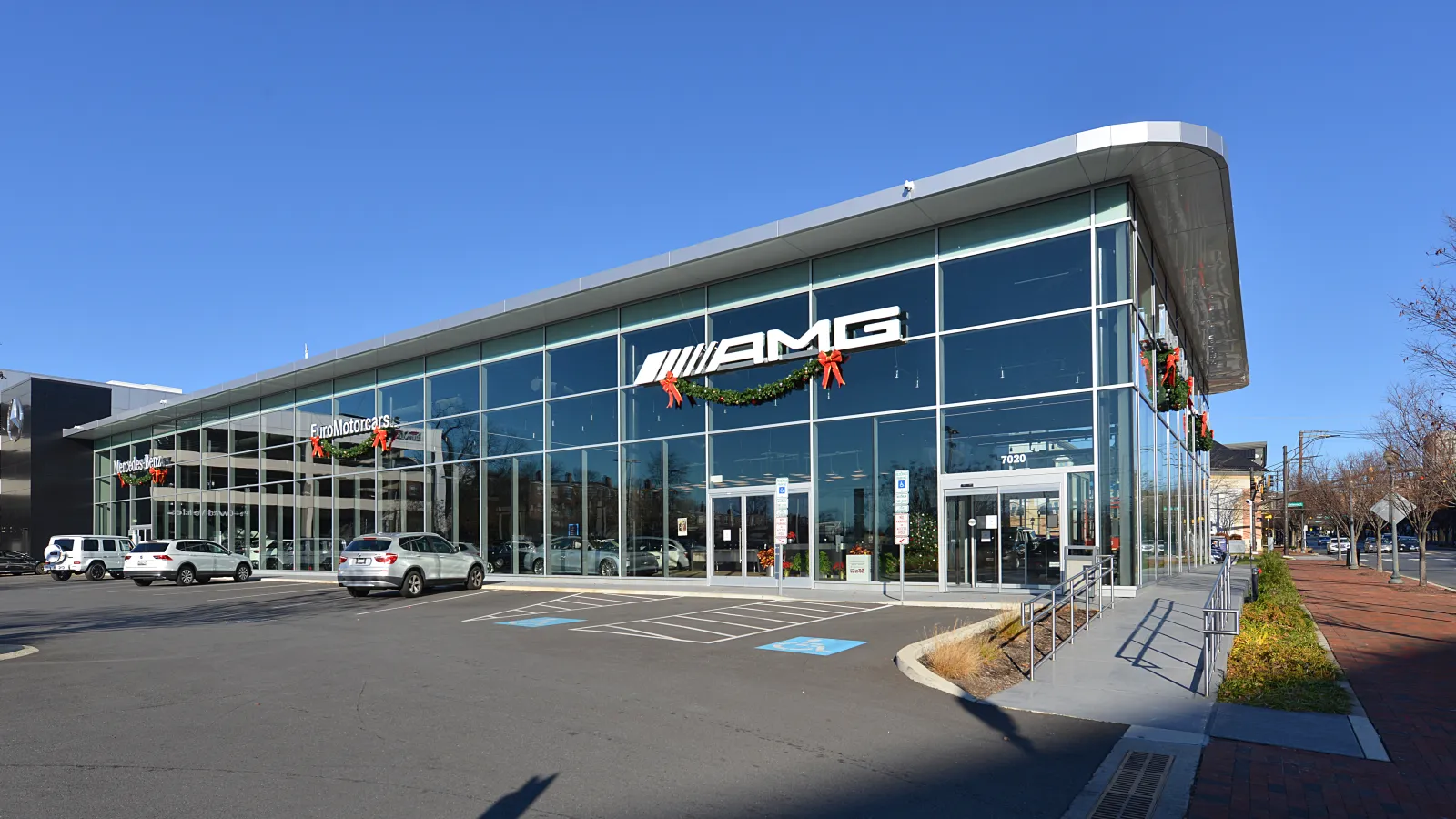
That second sticker is the tell. It sits beside the Monroney, often on plain paper with the dealer’s logo, listing paint sealant, nitrogen-filled tyres, VIN etching, a tracking device, a market adjustment. Nothing on it came from the factory. It is printed in the back office, and every line on it is a conversation.
Which dealer fees are negotiable, and the words to use
Doc fee rules vary by state, and that is the first thing to look up before you walk in. California caps the document processing charge at $85 for dealers under a DMV partner agreement and $70 for the rest, under Vehicle Code 11713.1. Governor Gavin Newsom vetoed a bill to raise it on 14 October 2025, calling three times the current cap “far beyond what an inflation adjustment would justify.” New York caps the fee at $175 under 15 NYCRR 78.19. Washington caps it at $200 and, better still, RCW 46.70.180 makes the dealer disclose in writing “that the documentary service fee is a negotiable fee.” Texas has only a $225 safe harbour from its Office of Consumer Credit Commissioner. Florida caps nothing, and averages there sit near $999.
| Line item | Who sets it | Negotiable | What to say |
|---|---|---|---|
| Destination, freight or delivery charge | Manufacturer, on the Monroney label | No | “I know freight is fixed. Let’s work on the selling price instead.” |
| Documentation or doc fee | Dealer, capped in some states | Sometimes | “What is the cap here? If the fee cannot move, take it off the price.” |
| Dealer prep or predelivery service | Dealer | Yes | “MSRP already includes the recommended pre-delivery service. Remove it.” |
| Advertising or regional ad fee | Distributor or dealer group | Sometimes | “Show me where that appears on the factory invoice.” |
| Market adjustment or additional dealer markup | Dealer | Yes | “I do not pay over sticker. I will buy the same car 40 miles away.” |
| Add-ons: sealant, nitrogen, etching, trackers | Dealer | Yes, and refuse anything not yet installed | “I did not order those. Remove them or remove the charge.” |
| Sales tax, title, registration, state fees | Government | No | Nothing. Spend your energy elsewhere. |
Federal enforcement changed shape recently. The Fifth Circuit vacated the Federal Trade Commission’s CARS Rule on 27 January 2025 and the FTC pulled it from the rulebook on 12 February 2026, so those specific requirements are gone. Section 5 of the FTC Act is still there. The agency warned 97 dealership groups on 13 March 2026, then published pricing transparency FAQs on 15 September 2026 saying an advertised price “must be the actual price that any consumer can walk in and pay to purchase the vehicle, excluding only charges that the government requires the consumer to pay,” and must include “the full document fee if the dealer requires any consumer to pay it.” Print that page. It is the politest way to end an argument about an advertised price that grew by $1,400 on the way to the finance office.
One last thing. The destination charge is rolled into the amount you borrow, so it also feeds the interest you pay, and possibly the new auto loan interest deduction. A $2,795 freight line on a 72 month note is no rounding error.
FAQ
Does the destination charge get smaller if the dealer is near the factory?
No. Automakers calculate a national average and bill the same amount everywhere. Cars.com’s example is a Honda CR-V built in Ohio, which carried an identical $1,350 fee in Cleveland and in Seattle. The only regional variation comes from independent distributors, such as the Toyota operations covering ten southern states, which set their own higher delivery, processing and handling charge.
Which dealer fees are negotiable if my state caps the doc fee?
All the others. A cap fixes the ceiling on one line, so if a California dealer charges the maximum $85 there is little point arguing it. Aim instead at dealer prep, the advertising fee, any market adjustment and every add-on. Ask for the same dollars back on the selling price rather than on the fee itself, because the total is what you finance.
Can a dealer charge destination twice, once on the sticker and again on the order?
It should never happen, and if you see a second delivery or freight line on the buyer’s order, point at the Monroney and ask what the extra charge covers. Dealer-to-dealer trade swaps are sometimes billed this way. You did not commission that transport, and the charge is negotiable in the same way any dealer-added line is.
Is a destination fee ever waived?
Rarely, and almost never as a line deletion. What happens instead is a manufacturer incentive or a dealer discount equal to the freight amount, which arrives as a rebate or a lower selling price. Ask for it in that form. A salesperson promising to remove the charge outright is either mistaken or moving the money into another column.
About this article: checked on 16 September 2026 against the text of 15 U.S.C. 1232, the Federal Trade Commission’s pricing transparency FAQs published 15 September 2026 and its March 2026 warning letters, Kelley Blue Book’s and Cars.com’s March 2026 surveys of 2026 model year destination charges, a photographed Kia Monroney label, California Vehicle Code 11713.1 and Governor Newsom’s October 2025 veto of SB 791, New York 15 NYCRR 78.19 and Washington RCW 46.70.180. Fees move without notice, so confirm the number on the sticker in front of you.
1 thought on “Can You Negotiate a New Car Destination Fee in 2026?”